Category: Articles

  • 13 July 2019

                                                                                        13 July 2019

    Dear friends,

                “For the Lord God is a sun and shield: the Lord bestows favor and honor. No good thing does he withhold from those who walk uprightly” – Psalm 84:11.

    I am 84 today and Psalm 84 comes to mind—especially verse 11. If I told you how often I think of and apply this verse, you would think I am surely exaggerating! But I actually think of Psalm 84:11 every day – at least six days out of any week. Why? It is because I believe these words to be true: that God only wants what is best for us and He will not withholdwhat is good for us if we seek to please Him.

    Thank you for your prayers. I am continually overwhelmed that you pray for us and also when I learn of someone who prays for us whom I have never met. Such a word moves me no end. If the Apostle Paul would ask for prayer, so can I.

    I pray this every day: “Hear the prayers of those who pray for us and answer their prayers for themselves”. That is my prayer for you every day.

    Louise and I have been invited back to London next year, but we are praying to know for sure if this is God’s will.

    For some reason God has opened doors for me in the Far East – Shanghai, Hong Kong, Korea and – so it would seem – Japan and Singapore. I am wanted in Beijing, but we are not sure what God’s will is regarding this. I will speak at the Feast of Tabernacles in Israel in October of this year. Please pray that I will be a blessing to those who attend.  Nashville will be our base from 31 July.

    I am exceedingly grateful to God for the open doors and His enabling grace at my age. My next book is Word and Spirit– available in October. I am now finishing up For an Audience of One which will come out next year. Our son TR, who handles my website and sale of books, continues to travel with me to most places. 

    God bless you all. Again, thank you for your prayers. From Louise, TR and Annette, Toby, Timothy and Tyndale, Rex and Melissa.

    All our love.

    RT 

  • The Hebrides Revival (1949-1952)

    The Hebrides Revival (1949-1952)

    Recently (7-9 June 2019) I had the privilege of speaking in Stornoway, Isle of Lewis, Scotland. Rev. Kenny Borthwick, a Church of Scotland minister, was the other speaker. We were invited by the Rev. Tommy MacNeil, minister of the Martin’s Memorial Church in Stornoway. This year is the 70thanniversary of the beginning of the Hebrides Revival. The purpose of the Hebrides Revival Conference was to thank God for that wonderful era.  Of course people prayed that God might be pleased to do it again. And God may yet do it again! I certainly hope so.

    The “epicenter” of this Revival seventy years ago was in Barvas, some twelve miles from Stornoway. One can easily find material from Google and in some books that have described this phenomenon. I myself had read as much as I could about the Revival before I went there.

    The main person associated with the Hebrides Revival was Rev. Duncan Campbell (1898-1972). But Duncan Campbell did not bring the Revival; it was already in progress when he arrived. By “revival” I do not mean a planned, orchestrated series of meetings. In America we hastily use the word “revival”; the word “mission” is preferable. Why? Because true revival is a sovereign work of the Holy Spirit. So it was in the Hebrides in 1949 and the next couple of years. The Holy Spirit was the Architect and Sustainer of this extraordinary event. 

    I first heard of  the Hebrides Revival from Dr. John Sutherland Logan, the Scotsman whom God used on 24thNovember 1954 to help me see I was called to preach. I later began to hear of second hand reports of the unusual phenomena that accompanied this outbreak of the Holy Spirit. It was Dr. Logan who told me how Duncan Campbell, seated on the platform ready to speak in Northern Ireland, suddenly felt an impulse to leave at once and go to  Harris, also a part of the Hebrides. He left the platform immediately without addressing the congregation and took a boat to Harris. Without telling them he was coming, he landed at Harris where people were waiting for him as if it had been planned. Revival then broke out in Harris.

    Here are some observations that gripped me while I was in Stornoway last weekend, having  asked all the questions  I could think of.

    1.The preaching during the Hebrides  Revival was in Gaelic. Those converted in homes after the services included those who spoke English; that is when non-Gaelic speakers were saved.

    2. The town of Stornoway – the capital  of the Isle of  Lewis – was completely bypassed. The Revival came only to small towns or villages in the Hebrides. The reason for this was thought to be that the ministers in Stornoway opposed the Revival.

    3. The Hebrides Revival was all about people being saved – converted. There is no doubt that Christians were “renewed” – yes. But the stress was on the need for people to be saved.

    4. The pervading assumption in people’s minds was their final destiny – Heaven or Hell. Duncan Campbell used a phrase, “hell deserving sinners” – the sort of expression one doesn’t hear often these days. Most people nowadays feel that they are entitled, or that God owes them something.

    5. According to Duncan Campbell, the preaching was expository.I find this interesting. I wish it were not so, but I suspect that much preaching one hears today is motivational rather than biblical.

    6. People did not want to go home when a  service was over. The people would either linger at church or often go into nearby homes for further fellowship and singing. Conversions would often take place in homes as well as in church. People typically left for their own homes at 2 o’clock in the morning. Or later.

    7. The Hebrides Revival in many ways was a young people’s phenomenon. Many teenagers and those under the age of forty were converted. There are four known persons from Barvas still living that were saved during the Hebrides Revival. I met them all. They were mostly teenagers when they were converted.

    8. Many people walked several miles to reach the church, some twelve miles each way, and never got blisters on their feet or felt tired.

    9. People would be saved not just in a church building but when walking in the country side. There was  a great sense  of the fear of God  all over the area. Spontaneous conversions  happened everywhere. One well-known story that came out of the Hebrides Revival was when a mother and her twenty-one year old son were walking on a  country road. Suddenly her son William was overcome with emotion and began to  cry. She said to him, “Oh Willie, at last you have come home”. I met that  man last weekend and spent time with him – the Rev.  William MacLeod, now 92, a retired minister in the Church of Scotland.

    10. Unusual  manifestations would appear spontaneously. Much has been written on these, so I will not spend a lot of time here – e.g., lights appearing to show people the way home in the dark, a home shaken as if from an earthquake (dishes and silverware falling off the table) while people were praying and worshiping or over two hundred people meeting in one place spontaneously at the police station in the  middle of the night and didn’t know why they were there – but then began to pray and worship God. The only explanation given: the constable was a God-fearing man and that is why people found themselves going to that spot – each not knowing another was also coming. Some walked many miles.

    11.People functioning with little or no sleep. It was common for services –  or in people’s homes after the meetings – to go into the night and morning hours. Some would get home at 5 o’clock in the morning and go off to  work at 7 a.m. and work all day without getting tired! Imagine that. However did they do it? This sort of thing – as so much as can be read about  this Revival – defies a natural explanation, especially when you consider that this movement of the Spirit lasted three to four years.

    12. The  opposition to the Hebrides Revival came  not from the world but from Christians. The people who opposed the manifestations generally missed out on this move of the Spirit. Duncan Campbell had become a part of the Faith Mission, an organization influenced partly by John Wesley’s teaching. It was regarded by some staunch Calvinists as being Arminian. Although Duncan Campbell remained a minister of the United Free Church of Scotland – never abandoning his robust view of the sovereignty of God, some regarded him as Arminian – which he wasn’t.

  • Paul’s Prison

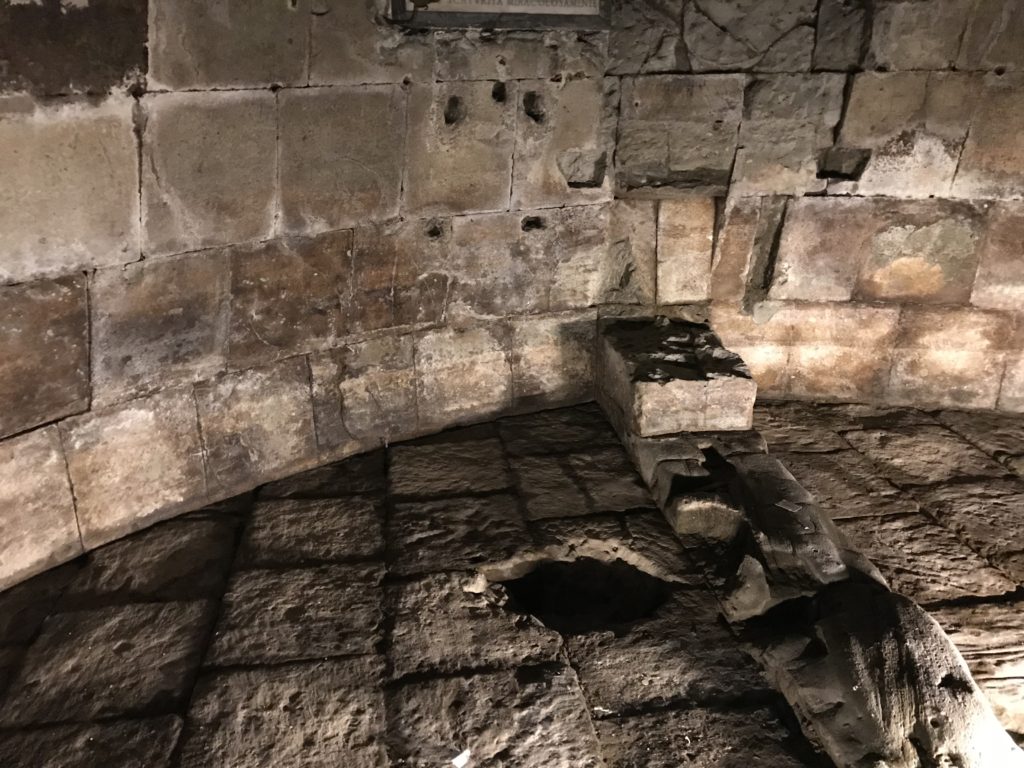
     Today Louise and I visited Paul’s prison in Rome. This, according to archaeologists, is where Paul wrote Colossians – which I am preaching from these days – plus 1 and 2 Timothy, Ephesians and Philippians).  This is a small cold, damp, dark dungeon with no illumination except from a hole in the ceiling (from which he was lowered and through which he got food). It is where Paul was kept as he waited for his final summons, having written: 

    “For I am already being poured out as a drink offering, and the time of my departure has come. I have fought the good fight, I have finished the race, I have kept the faith. Henceforth there is laid up for me the crown of righteousness, which the Lord, the righteous judge, will award to me on that Day, and not only to me but also to all who have loved his appearing” (2 Tim.4:6-8).

    We were blessed to have about ten minutes there alone, and then other tourists began showing up.

    Having preached the previous Sunday on “Mysterious Reasons for Suffering” from Colossians 1:24 at Kensington Temple, I was filled with awe. Knowing how much the Apostle Paul suffered – and how little I have suffered, I felt so unworthy. I tried to pray, but felt speechless. I could only lean on Jesus’ intercession to the Father knowing He prays according to the Father’s will (John 5:19), and I thus live by Jesus’ faith  (Gal.2:20). 

    As I say in my sermon on Colossians 1:24, there are two levels of suffering: (1) persecution for His Name (highest level); (2) any kind of suffering (physical pain, financial reverse, health issues, personal hurt, vindication withheld – whatever). We should count it pure joy if we fall into either category; that is, accept any measure of suffering with both hands (James 1:2). Just maybe, before it’s over, you and I will have our tiny bit of suffering upgraded to the Big League of suffering.

    But are we ready for it? I pray so.

  • Three Important Men in My life

    Three Important Men in My life

    As Lyndon Bowring drove us back to London from our Prayer Retreat in Oxford today I suddenly realized that the three men in the car with me – Lyndon, Clive Calver and Rob Parsons – are the three most influential British men in my life since Dr. Martyn Lloyd-Jones died in 1981. I feel compelled to write about them now.

    Clive Calver. In 1983, during the time he was president of the Evangelical Alliance, Clive came to my vestry at Westminster Chapel. I had never met him before. He came during the time of our greatest trial while at Westminster. In 1982 I had invited Arthur Blessitt, the man who has carried a cross around the world (and holds the Guinness Book of Records for the longest walk in history), to preach for me. Arthur preached for us six Sunday nights in a row during April and May 1982. He turned us upside down. It also led to six of the twelve deacons turning against my ministry. Arthur’s visit also led to doors being closedto me all over Britain. I was truly in No Man’s Land. Virtually no one in the Reformed world – of which Westminster Chapel has been a major part – wanted to have anything to do with me.

    As president of the Evangelical Alliance, Clive became one of the most extraordinary leaders of change in Evangelical England in the past fifty years. He turned the Evangelical Alliance around and gave it a profile it never had. He became a founder of Spring Harvest – an annual Christian festival that brought many Evangelicals and Charismatics together. Clive came to see me with an invitation to preach at a gathering called  “Leadership 84”. I accepted the invitation. It opened a new world to me – Anglicans, Evangelicals, Charismatics and Pentecostals. It was a world that I knew little about. This also led to Clive inviting me the following year to the previously mentioned Spring Harvest. I did the Bible Readings (as they are called in Britain – meaning Bible teaching) – seventeen years in a row. I became known all over Britain as a result. Whereas the Reformed world dropped me, I began receiving invitations from different denominations from all over Britain plus outside Britain. I can’t imagine where I would be today without Clive’s influence. 

    Clive was invited to be the president of World Relief in the USA. I was privileged to be one of two people to give references (the other being a member of parliament) before he was given the position.  Clive was later called to be the senior pastor of the Walnut Hill Community Church in Bethel, Connecticut. I preached for him there several times in recent years. He and his wife Ruth are now retired and live in Wilmington, North Carolina. 

    Lyndon Bowring.I first met Lyndon in 1985. He is Chairman of CARE, a Christian organization that seeks to bring laws and public policy in harmony with biblical principles. They have dealt with social issues such as pornography and abortion. Lyndon introduced me to Dr. James Dobson, who has since endorsed a number of my books and has had me as a guest on his radio show numerous times. Dr. Dobson put my book Total Forgiveness on the map. 

    Lyndon sat next to me on the platform when I first preached at Spring Harvest. A deeper friendship developed rapidly from that time. He was a major influence in helping me adapt to people quite different from congregations at Westminster Chapel. I had been used to bringing exegetical sermons to theologically-minded people. Those who attended Spring Harvest were vastly different. I doubt whether I would have been invited to Spring Harvest seventeen years in a row had not I listened to Lyndon’s shrewd, gentle suggestions how to adjust to a different sort of people. When I was invited to speak at Keswick in 1992 Lyndon’s input made a huge difference. During this time Lyndon introduced me to Wyn Lewis, pastor of Kensington Temple. Wyn arranged for my first meeting with Paul Cain. Lyndon was with me at that lunch. He introduced me to Colin Dye who succeeded Wyn at KT. Colin arranged for me to meet Rodney Howard-Browne. Lyndon was with me at that breakfast. The reason I go to KT for six months every year is traceable to Lyndon. He introduced me to Alan and Julia Bell, whose counseling enabled Louise and me to go through a difficult time in our marriage. Alan and Lyndon were with me when I first met Yasser Arafat. The three of us made at least a dozen trips to Israel.

    Lyndon is the brother I never had, the best friend I have ever had, a man who  knows me better than anyone outside my family. He and Celia became like family to Louise and me. For the past several years I have shared virtually all sermon notes with Lyndon in advance of almost every sermon preached at KT. He is amazingly apt in making suggestions I would not have thought of – only making my preaching better, more interesting and more relevant.  And this is but a drop in the bucket when it comes to his influence and friendship. God has providentially put Lyndon at my side during our darkest hours, most critical times of decision and that influence continues to this day.

    Rob Parsons.As Lyndon and I were walking in Down Street one afternoon, we ran into Rob Parsons, the chairman of Care for the Family and also the most popular Christian writer in the UK. I had never met him, but was flattered that Rob said he had just finished reading my book Once Saved, Always Saved. It is hard to say whether Lyndon or Rob is the “James Dobson of England” as both of them focus on marriage and the family.Apart from being an English teacher Rob was trained in law. He has since spoken to thousands of lawyers in seminars all over the UK and is one of the ablest speakers in the United Kingdom. A few days after Tony Blair became prime minister, I wrote to Mr. Blairto assure him of my prayers, then added a PS – “Enclosed is a book called The Sixty Minute Fatherby Rob Parsons”. The prime minister wrote back the next day. He did not mention my praying for him but thanked me for sending Rob’s book! Rob and Diane live in Cardiff, Wales.

    When I finished my manuscript on The AnointingI sent it to Rob with the view that he might write the Foreword. He agreed and then volunteered to help me tweak certain sentences and paragraphs. He made this book twice as interesting. But there is more – much more. Rob has since kindly read almost every book I have written – helping me with his ingenious suggestions. I honestly feel like a fraud when people compliment me for my books. For example, my books such as In Pursuit of His Glory,Thorn in the Flesh,Total Forgiveness and Totally Forgiving Ourselves. After he read the latter book he phoned me to say, “R. T., I know what your next book should be – if you have the courage…Totally Forgiving God”.People have criticized me for the title but no one (that I know of) has criticized the contents. Rob also read the manuscript of Holy Fire and suggested the griping opening sentences of that book. I could go on and on. In a word: Rob Parson’s influence on my writing has been incalculable.

    So here I was today, driving from our Prayer Retreat in Oxford, with these three men. And I have hardly come close to conveying how God has used these men in my life over the past thirty-five years. Thank You Lord.

  • Paul Cain (1929-2019)

    Paul Cain (1929-2019)


    Paul Cain was the most unusual prophetic person I ever met. His gift was extraordinary. I was honored to meet him and to know him. John Wimber wanted us to meet. Paul said that when he heard my name he was anxious to meet me more than anybody he ever knew. He even said I would be the brother he never had.

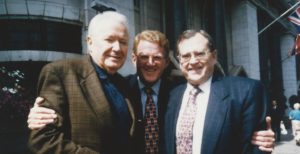
    We got off to a good start. It began with lunch with Paul, Lyndon Bowring and me (see photo above). Paul gave me a prophetic word that was so relevant that I knew I should affirm him. I immediately invited him to speak at Westminster Chapel. He was well received from the beginning. In those early days he and his assistant Reed Grafke had become like family. We laughed and laughed a lot together. We spent hours and hours together in London and in Florida where they would visit our family on our fishing holidays. We spent days bonefishing over two summers in the Florida Keys. He was present when I first spoke at the Toronto Airport Fellowship – the night I was literally unable to string two sentences together intelligibly in front of two thousand people; that is, until I changed my text to Hebrews 13:13. I have written about this embarrassing experience elsewhere.

    He later asked to become a member of the Chapel, saying that he wanted this “more than anything I have wanted in my life”. We broke the rules and made him a member. If I could turn the clock back, I would not have allowed this. After he was made a member he stopped returning my phone calls. His attitude toward me changed. I could not understand what was going on. This gave me as much pain as the pleasure he previously gave me by his prophecies.

    Hearing Paul Cain stories was like reading accounts from both Elijah and Elisha. The extraordinary words of knowledge and prophetic utterances – often in puns – that he gave to people defy a natural explanation. No doubt other people who knew him will recount the amazing stories. It is only a matter of time that a book about him will come out.

    There is no way to verify the story that his mother had cancer throughout her body when she was pregnant with Paul – that she was visited by an angel and was miraculously healed by the time Paul was born. What is undoubted is that from an early age Paul was given a supernatural gift of healing and words of knowledge. In the early 1950s he was a “boy wonder” – a healing evangelist that paralleled the early era of Oral Roberts. He said that the “healing anointing” that was present in several people in those days lifted but his prophetic gift continued on. He also became a recluse after that for many years.

    I refer to him in the opening statement of my book The Anointing – that I had been influenced largely by him and Dr. Martyn Lloyd-Jones, strange as that may seem. But it is true. A conversation with him in a restaurant in Victoria Street, London, began the Word and Spirit ministry that I have sought to carry on. I said to him, “Paul, you need my theology; I need your power”. He said, “You have a deal”. Our first Word and Spirit Conference was held at Wembley Conference Centre in October 1992. But what many people remember was not anything Paul said but my address about Ishmael and Isaac. It was largely rejected, but Colin Dye, pastor of Kensington Temple, accepted it.

    Paul was however a blessing to Westminster Chapel. He gave us timely words that were greatly needed. Nearly all he prophesied came true; almost all his words of knowledge were astonishingly accurate. You can read more about this in The Anointing and In Pursuit of His Glory – an autobiographical account of my twenty-five years in Westminster Chapel which includes a whole chapter on Paul Cain.

    “Thank God for the least thing”, he would say when you were praying for someone’s healing. By that he meant we should not be ashamed to pray for a common cold as well as cancer when many cynics are critical. “The more God uses me the less I am able to enjoy it”, he used to say. I know what he means by that, having just finished preaching in Korea during a fifteen hour jet lag with little sleep. Arthur Blessitt used to say the same thing: “the tireder I am the more God uses me”. I could write a lot about Paul’s ministry to the Chapel, to my family and friends. One thing I will share is, when Rodney Howard-Browne preached for me Paul said I would lose some people (twenty members resigned in twenty-one days as it turned out), “but they will be replaced by pure gold”. He was right.

    Paul Cain was not an intellectual but he was very intelligent. Dr. Lloyd-Jones used to make a distinction between being intellectual and being intelligent. “A cockney taxi driver will often be intelligent whereas an Oxford professor will be intellectual but often not be intelligent” (e.g. lacking in common sense). Paul was conscious of having little or no education. He was sensitive to any criticism, would worry more about one person in the audience against him than a thousand that were for him.

    I wrote a book Is God for the Homosexual?It was widely accepted by the gay community in London for my sympathy toward one’s sexual proclivity but not for the fact I said the Bible teaches total abstinence from sexual activity outside heterosexual marriage. In researching this book I learned a lot. One thing was that a person often becomes gay by the absence of a father and the smother-love of the mother. Paul Cain’s background was precisely that. And yet I had no idea he was gay. Knowing how he related to his father should have made me see the obvious, but I simply did not see any evidence of it.

    This was almost certainly why he avoided me in those years he would not return my calls. When I finally caught up with him years later – with my friend Jack Taylor – I said to him, “Paul, you are supposed to be accountable to me. But I have no idea who you are accountable to. I would lovingly warn you, if you do not listen, you are going to be yesterday’s man”. He wept. He seemed grateful. But I knew the next day he was staying aloof from me. Two years later Jack Taylor said to me, “Have you heard the news about Paul?” “No, what do you mean?” Jack then told me of his moral failure. It was the worst news I think I ever received in my lifetime.

    The gifts of God are without repentance, that is, irrevocable (Rom.11:29). Paul’s gift pretty much continued on in his old age, although the last time I heard him he mostly reminisced and had minimal fresh prophetic words.

    I am not Paul’s judge. God will bring to light what is absolutely true (1 Cor.4:5). But if I am totally honest, it seems to me that Paul was an example of one who blew away his inheritance. He will be saved but by fire (1 Cor.3:15).

    I loved him, liked him, admired him, do not regret knowing him. I kept praying for him daily. Louise and I prayed for years that he would finish well and achieve more at the end of his life – like Samson – than in the whole of his life. Our prayers were not answered. He went to heaven under a dark, dark cloud.


  • How to pray for R T in 2020

    My son TR suggested I put this on my website – for one reason: that those who keep up with me will truly pray for me. Every year I say, “This is the busiest I have ever been”, saying to myself, “It could not get busier”. But it gets busier. I am 84.

    January. On 5th January I fly to England – to preach for J John’s Evangelism Conference – three one hour addresses to 400 people, including evangelists in UK. On 8th January I fly to Dallas – where I meet TR. Then TR and I fly to Seoul, Korea. I preach twice Sunday 12th January to English speaking people. Monday to Friday I speak at the Onnuri Church (Presbyterian, 71,000 members) at 5:00 am each morning for 45 minutes each with translation. Then on Sunday 19th January I speak twice to the Onnuri Church. Then Mon-Wed (Jan 20-22) seven times (90 min each with translation) to the Onnuri staff of 400. On Thursday 23rd Jan we fly to Nashville, rest on 24th January. We fly to Houston on 25th Jan to speak three times to the First Baptist Church, Pasadena, Tx. on Sunday. We fly back to Nashville on Monday 27th Jan, then fly Tues 29th Jan to speak to Minister’s Conference in Alexandria, Louisiana Tues and Wed. TR will return to his family, I will help Louise pack for England.

    1st February fly to London, arriving the next morning 2nd Feb. We will discover where in London we live for six months. See Itinerary for preaching at Kensington Temple from February to July. I will also be filming 72 TV programs (called Word and Spirit) for TBN UK.

    In March TR will join me; I will preach in Doha, Qatar (Middle East) 11th to 14th March. 

    In April I will speak at Solomon’s Porch in Hong Kong – Wed over Easter Sunday am. On April 25th I will speak at my former church – Westminster Chapel. 

    During May, June and July – apart from preaching duties at Kensington Temple, I will be preaching at eight mid-week services in behalf of CARE. Lyndon Bowring (Executive Chairman of CARE) will chair the meetings, Graham Kendrick (Song Writer) will be leading worship. 

    We return to Nashville on 29th July. Two days later we drive from Hendersonville, Tn. (our home) to Asheville, North Carolina. I will then speak thirteen times (one hour each) on the Sermon on the Mount – August 3-7. I will be thrilled if some of you can join us! 

    I will stop now, only to say we will be in Shanghai, China, Pretoria, South Africa and several places in the USA until December. Pray that I will be led of the Holy Spirit in accepting invitations between August and December.

    Thank you for your prayers. I need them more than ever and am so grateful to you.

  • New Year’s Letter 2019

    New Year’s Letter 2019

    “For by the grace given to me I say to everyone among you not to think of himself more highly than he ought to think, but to think with sober judgment, each according to the measure of faith that God has assigned” – Romans 12:3 (ESV).

    Dear friends,

    Thank you for your prayers.

    I thank God for Louise’s successful spinal operation. We are relieved and very grateful to God for bringing her through this very major surgery.

    We return to London for the sixth time – February 1st  to July 31st– with Pastor Colin Dye of Kensington Temple. Fifteen years ago the late Dr. Michael Eaton told me I should deal with Colossians – a book I have never preached through. A few months ago our friend Bobby Conner said twice to me, “Every time I look at you I see Colossians”. In the mouth of two witnesses shall every word be established (2 Cor.13:1). I plan to preach through Colossians while in London, then repeat these at The Cove next August 26-30. Please pray for me that I will do justice to this book.

    For reasons I won’t explain (for now) I have switched to the ESV = English Standard Version. In January 1986 at Westminster Chapel we switched from the KJV to the NIV. This is my third (surely the last!) change during my lifetime.

    I have been reading Romans 12:3 everyday for two years in addition to my Robert Murray M’Cheyne Bible Reading Plan (which I have followed for over 40 years). Romans 12:3 is most sobering and humbling to me, especially the older I get. It means we must come to terms with the limits of our calling. Nobody can do everything. I so want to accomplish more than I have. A hard question I ask almost daily: am I to believe prophecies given to me – or are they of the flesh? I wish I knew. So I read Romans 12:3 daily; it is practicing what I preach about the sovereignty of God. My heart aches for conditions of the church and the world around me. I feel I have done so little. But if God has more for me to do, I welcome it. If not, I must accept that He determines how long I live and what I accomplish in the meantime. I pray daily that I will not run ahead of the Lord like Joseph and Mary did (Luke 2:44). Running ahead of God is so easy to do.

    It has been a wonderful year – busiest yet. I won’t go over what you may already know.

    God bless you.

    Warmest greetings from all of us

    R.T., Louise, T. R., Annette, Toby, Timothy, Ty, Melissa and Rex.


  • Why pray to the Father?

    Why pray to the Father?

    There are sincere Christians around who struggle in prayer when it comes to the issue: to Whom should we pray? To God the Father, God the Son or God the Holy Spirit?

    Does it matter? Perhaps not. The thief on the cross addressed Jesus: “Jesus, remember me when you come into your kingdom” (Luke 23:42). And Stephen, among the first seven deacons and the church’s first martyr, addressed our Lord Jesus just before he died: “Lord Jesus, receive my spirit” (Acts 7:59).

    What about praying to the Holy Spirit? There is nothing wrong with this; after all, the Holy Spirit is God as much as the Father and the Son. Hymns modern and ancient have sung directly to the Holy Spirit:

    Holy Spirit, we welcome you” – Chris Bowater (b.1947).

    “Holy Spirit, truth divine, dawn upon this soul of mine” – Samuel Longfellow (1819-1892).

    These things said, I want to make the case for praying—generally speaking—to God the Father. Keep in mind that there is no rivalry in the Trinity; the persons of the Trinity heap praise on each other. The Father doesn’t mind that we pray to His Son or to the Spirit; the Holy Spirit doesn’t mind that we pray to the Father or to the Lord Jesus Christ.

    Why then pray to the Father?

    Seven reasons for addressing our prayers to the Father

    First, Jesus directed us to do so – at least twice – as in the Lord’s Prayer.

    Pray then like this: ‘Our Father in heaven, hallowed be your name’” (Matt.6:9).

    When you pray, say: ‘Father, hallowed be your name’” (Luke 11:2).

    Second, Jesus always directed His own prayers to the Father. For example,

    I thank you, Father, Lord of heaven and earth, that you have hidden these things from the wise” (Matt.11:25).

    Father, the hour has come; glorify your Son that the Son may glorify you”(John 17:1).

    The only time Jesus called Him Godwas when He was dying on the cross and cried out, “My God, my God, why have you forsaken me?” (Matt.27:46). This was the moment when all our sins were transferred to Jesus: “For our sake he made him to be sin who knew no sin, so that in him we might become the righteousness of God” (2 Cor.5:21). It is called propitiation – when Jesus turned the Father’s wrath away.

    Third, the Apostle Paul let us know that he prayed to the Father:

    I bow my knees before the Father, from whom every family in heaven and on earth is named” (Eph.3:14-15).

    Fourth, the Father is omniscient—that is, He knows the future as perfectly as He knows the past and present. Jesus admitted that He did not know the day of His Second Coming (Matt.24:36). Whether He—along with the Holy Spirit—knows the future as perfectly as the Father is an understandable deduction we might make (cf.Matt.28:18). But the Scriptures do not directly address this.

    Fifth, to affirm the God of the Bible – the Father. To show we are not ashamed of Him.Jesus said, “The Father is greater than I” (John 14:28). Was this statement merely an act of humility?  I don’t think so. I believe it is true – for more reasons than I will attempt to unravel here. At the same time we must never forget that the Word – logos –was in the beginning with God and the Word was God and nothing was made without the Lord Jesus (John 1:1-2; Col.1:16-17). Jesus is God as though He were not man and yet He was man as though He were not God; He was and is the God-man. But there must be a good reason Jesus said, “The Father is greater than I”. And Paul makes an interesting eschatological statement: “When all things are subject to him [Jesus], then the Son himself will be subjected to him [the Father] who put all things in subjection under him, that God [the Father] may be all in all” (1 Cor.15:28). I am not able to explain all that this means. But I have felt for a long time that the least mentioned and the least honored and most neglected person of the Godhead among some Christians in our generation is God the Father. Many books are written about our Lord Jesus Christ, and an incalculable number of books are written about the Holy Spirit (I myself have written at least three books on the Holy Spirit). It is my opinion that Jesus Himself would applaud books written about His Father – the least understood and most hated person of the Trinity. The world does not generally send vicious attacks upon Jesus but rather God the Father for allowing suffering.

    Sixth, only a Christian can refer to God as Father. The Muslim can’t. Think about that. No Muslim considers Allah as Father—ever! But you and I can. Even the liberals who refer to God as Father of all men and women because of their universalism bring no glory to God for doing this. You and I have the high and inestimable privilege of calling God Father. Only the believer in Jesus Christ can rightly do this.

    Seventh, when you get to know God as He is in Himself, you will be overwhelmed with worship. Moses requested, “Teach my your ways . . .” (Exod.33:13). Too many of us pray in order to get something from God. Try this, getting to Know Him as He is in Himself. You may find yourself saying, “I am so grateful to have a God like this”. You will find yourself saying, “God, I love your for being just the way you are. I would not change you even if I could”. Yes.

    What a mighty God we have!

    Finally, if it is not of great consequence whether to pray to the Father, to Jesus or to the Holy Spirit, why make a case for praying to the Father? I answer: I want to be as biblical as I can be. I want to be God-centered and Christ-centered in my theology and in my preaching.

  • A Spark

    A Spark

    Consider what a great forest is set on fire by a small spark” – James 3:5 (NIV).

    “Adairville was wherethe spark camethat ignited the Second Great Awakening. The first camp meeting began at Red River Church House” – Ricky Skaggs.

    If a woman began shouting in the middle of taking the Lord’s Supper, should she be stopped? Or encouraged?

    That is a question a guest preacher may have been wrestling with when he was in charge of the Lord’s Supper at the Red River Meeting House in Logan County, Kentucky in June 1800.

    What happened was this. A woman began shouting spontaneously and loudly during the sacrament of the Lord’s Supper at a service in Logan County, Tennessee in June 1800. This led eventually to the Cane Ridge Revival of 1801. That a woman shouting led in some way to the Cane Ridge phenomenon is a historical fact and not under dispute. What could be debated is whether her shouting and what followed afterwards was the work of the Holy Spirit, the flesh or the devil.

    I have referred to the Cane Ridge Revival of 1801 in several of my books, the first of these being in Stand Up and Be Counted. That small book offers a biblical rationale for giving an invitation for people to confess Christ publicly after preaching the Gospel. Billy Graham kindly wrote a brief foreword to it. I have since sought to learn all I could about the Cane Ridge Revival, known as America’s “Second Great Awakening”, the first being the New England Awakening that took place mostly in Massachusetts and Connecticut in approximately 1735-1750.

    I happened to tell Ricky Skaggs that I was preaching in a Baptist church in Adairville, Kentucky. He wrote back immediately and made the statement above regarding “the spark” that ignited the fire that led to America’s Second Great Awakening. I had forgotten that this small town in Logan county is very near where the old Red River Meeting House was located – a spot of vital importance in American church history. When I arrived at this church I inquired if there might be anyone around who could tell me more about what happened there almost two hundred years ago?

    There was. A couple whose property is adjacent to the Red River Meeting House shared a lot of valuable material with me. They had dozens of articles and letters written by eye witnesses of what happened in 1800 – a year priorto the Cane Ridge Revival of 1801. The more I read of what they kindly gave me the more I was gripped. I began to see that what I learned from these papers warranted a chapter in this book. What I discovered is not new to the scholars who have written on this era of American church history. But much I learned was fresh to me. Sadly there are no dates or names on many of the documents, but these copies are in my files and appear authentic to me. It should be noted that some of the people quoted in this chapter were not skillful or educated writers, neither did they always say things as clearly as we would wish.

    Because the Red River meeting house is in Logan county and Cane Ridge is in Bourbon county – both being in Kentucky, some hastily assume the two outpourings of the Holy Spirit are one and the same. Whereas the two phenomena are organically connected, they are a year apart and a hundred miles apart. Logan county is approximately one hundred miles west southwest of Bourbon county where Cane Ridge is located. Cane Ridge was where America’s second Great Awakening eventually took place a year later – in August 1801.

    It is what happened in the summer of 1800 in Logan county that equally fascinates me – the spark that ignited in the old Red River Meeting House.

           James McGready (1763-1817)

    One of the important figures that eventually led to the Cane Ridge revival – sparked off initially in 1800 – was James McGready, a 37 year old Presbyterian who moved from North Carolina to Logan county, Kentucky in 1796. It was his ministry that paved the way for what would happen in June 1800. He had been rejected by his church in North Carolina for preaching what was called “revival doctrine”. In a word: he talked about the witness of the Holy Spirit consciously assuring a person that he or she was truly born again. This was perceived by many of his hearers as  new teaching – if not heretical, and it did not set well with many Calvinists who assumed that their moral living proved they were truly converted and therefore among God’s elect. McGready never wavered on his Calvinism – believing in Divine election, but stressed that people should have intimacy with God – sometimes called experimental religion. He became the pastor of three churches simultaneously in Logan County – the Red River meeting house, one at Muddy River, near Russellville, the other by Gasper River. The entire membership of the three churches consisted of less than a hundred people, with two or three dozen in each of these small meeting houses. There was constant opposition to his preaching in these places of worship.

    McGready spoke, lived and preached before an audience of One. He learned to be unafraid of man and listened to God. One who knew him said of him:

    “Like Enoch, he walked with God. Like Jacob, he wrestled with God . . .. Like Elijah, he was jealous for the Lord of hosts. . . He was remarkably plain in his dress and manners. . . He possessed sound understanding and a moderate share of human learning. The style of his sermons was not polished, but perspicuous and pointed; and his manner of addresswas unusually solemn and impressive. . .he was hated, and sometimes bitterly reproached and persecuted, not only by the openly vicious andprofane, but by many nominal Christians, or formal professors, who could not bear heart-searching and penetrating addresses, and the indignation of the Almighty against the ungodly, which, as a son of thunder, he clearly presented to the view of their guilty minds, from the awful denunciations of the word of truth. Although he did not fail to preach Jesus Christ, and Him crucified, he was more distinguished by a talent for depicting the guilty and deplorable situation of impenitent sinners, and the awful consequences of their rebellion against God, without speedy repentance unto life, and a living faith in the blood of sprinkling”.

    You must keep in mind that McGready had not been trained in “seeker friendly” type of ministry. The preaching of “hell fire and damnation” was an assumption that lay behind all he taught.  He did not think twice about. It was said that McGready “could almost make you feel that the dreadful abyss of perdition lay yawning beneath you and you could almost hear the wails of the lost and see them writhing as they floated on the lurid billows of that hot sea of flame in the world of woe”. One person remarked that his voice “was like a trumpet, you could hear it with ease” several hundred yards away.

    What happened in June 1800 was the culmination of McGready’s preaching for the previous four years in Logan county. There were tokens of revival during those years, with a number of people being converted at Red River – but also in the Muddy River and Gasper River Meeting Houses. There were other ministers involved as well at various times during these years, so one must not place undue amount of credit to McGready alone. In fact McGready was not the preacher in the pulpit when the spark ignited, as we will see below. But a great sense of the presence of the Holy Spirit was felt in all his three congregations in the years leading up to June 1800.

    McGready placed a strong emphasis on the Lord’s Supper. He managed to get a number of the people to sign a covenant. He presented to the members of his congregations for their approval and signatures a covenant that included these words; to this they affixed their names:

    “We unite our supplications to a prayer-hearing God for the outpouring of his Spirit, that his people may be quickened and comforted, and that our children, and sinners generally, may be converted. Therefore, we bind ourselves to observe the third Saturday of each month, for one year, as a day of fasting and prayer for the conversion of sinners in Logan county, and throughout the world. We also engage to spend one half hour every Saturday evening, beginning at the setting of the sun, and one half hour ever Sabbath morning, from the rising of the sun, pleading with God to revive his work”.

         The spark

    The year 1800 “exceeds all that my eyes ever beheld on earth”, wrote one observer. Rev. McGready planned to have different ministers to speak in services on a Sunday, Monday and Tuesday in June 1800. It was agreed that the sacrament of the Lord’s Supper be carried out on the Monday. “This was the greatest time we had ever seen before. On Monday multitudes were struck down under conviction”. On the previous Sunday a number of Presbyterian ministers plus a Methodist minister participated in the services. A sense of the presence of God reportedly set in. The services that Sunday were said to be “animated and tears flowed freely”.

    But nothing extraordinary was noticed until Monday – during the sacrament – when a visiting Presbyterian minister named William Hodge from Sumner County, Tennessee was preaching and conducting the sacrament of the Lord’s Supper and preaching. One reported:

     “Many had such clear and heart-piercing views of their sinfulness, and the danger to which they were exposed, that they fell prostrate on the floor, and their cries filled the house. . . those who had been the most outbreaking [sic]sinners were to be seen lying on the floor unable to help themselves, and anxiously inquiring what they should do to be saved . . . persons of all classes, and of all ages, were to be seen in agonies, and heard crying for redemption in the blood of the Lamb”.

    Strange as it may seem, by all accounts this outpouring of the Spirit began with a woman shouting loudly and spontaneously during the service centered on the Lord’s Supper. All the documents I have found regarding the Monday service at the Red River Meeting House state what follows or coheres with this account:

     “A woman at the extreme end of the house unable to repress the violence of her emotions, gave vent to them in loud cries”.

    Another witness reported it this way:

    “A woman in the east end of the house got an uncommon blessing, broke through order, and shouted for some time, and then sat down in silence”.

    Another account simply states:

    “A woman in the east end of the house shouted tremendously”.

    There is a consensus that “this was the beginning of that glorious revival of religion in this country, which was so great a blessing in thousands; and from this camp meetings took their rise” (Methodist Magazine 1820, vol. IV).

    There was to be an intermission after the Lord’s Supper, but the people did not leave their seats. Instead they “wept in silence all over the house”. An acute sense of the Holy Spirit’s presence reportedly settled on the people. An eye witness named John McGee described his experience in this service, stating that the guest preacher William Hodge “felt such power come on him, that he Quit [sic] his seat and sat down on the floor of the pulpit – I suppose, not knowing what he did.” He quoted Rev. Hodge as saying  “a power which caused me to tremble was upon me.” He added:

    “There was a solemn weeping all over the house. Having a wish to preach, I strove against my feelings. At length I rose up and told the people I was appointed topreach, but there was a greater than I preaching, and exhorted them to let the Lord God Omnipotent reign in their hearts, and to submit to him, and their souls should live”.

    Keep in mind that William Hodge was a visiting preacher, not the pastor, although the pastor Rev. James McGready was in the congregation. Rev. Hodge described what happened next:

    “I left the pulpit to go to her [the woman shouting], and as I went along through the people, it was suggested to me: ‘You know these people [being Presbyterians] are much for order – they will not bear this confusion. Go back, and be quiet’. I turned to go back,and was near falling. The power of God was strong upon me; I turned again, and, losing sight of the fear of man, I went through the house, shouting and exhorting with all possible ecstasy and energy, and the floor was soon covered with the slain. Their screams for mercy pierced the heavens, and mercy came down. Some found forgiveness, and many went away from that meeting feeling unutterable agonies of soul for redemption in the blood of Jesus”.

    In a word: the woman shouting was the spark.

    Some observations

    When the preacher “left the pulpit to go to her”, it was possibly to quiet her. Some report that it was to comfort her. It is not clear whether the “suggestion” was in Rev. Hodge’s own mind – from what he called “the fear of man” – or if someone was audibly cautioning him.  All we know is that he said, “I turned to go back”. That apparently meant he changed his mind that he approach the woman. Therefore after making a few steps toward the woman he made the decision to go back to the pulpit and sit down. This could have been the crucial, if not the pivotal, moment. He obviously changed his mind about going up to her. To comfort her would have ensured that the work of the Spirit would not be quenched. To quiet her would have been a “Presbyterian” thing to do, to say, “Calm down sister”. Or quietly escort her out of the Meeting House.

    But he did not go to her; he did not stop her.

    The suggestion, “These people are for order and will not bear this confusion” was probably in his own mind – that he feared what all the people might be thinking when this woman shouted and kept shouting. It was the “fear of man” that put this suggestion in his mind. Even if someone audibly made the suggestion to him, he rejected it. He may have felt he should comfort her; he may have felt he should quiet her to show he wanted “order” and therefore leave no room for allowing confusion. In any case he says that he overcame fear. Perhaps he had wondered what Rev. McGready the pastor might be thinking. We will see below that McGready was somewhat nervous about what happened.

    In a word: the guest preacher William Hodge was an unsung hero of what became the Cane Ridge Revival a year later. He deliberately decided notto approach the woman and got over what anyone might think and began exhorting as he did. I would add: it was the Holy Spirit on him that emancipated him from the fear of the people. One can be sure that Hodge exhorting as he did affirmed and comforted the woman who did the shouting.

    What we know is that – thankfully – no one stopped the outburst: the spark. Hodge instead proceeded to exhort the people. The result was that many men and women,  “overwhelmed with conviction, fell to the floor and would remain prostrate and motionless for hours”. But when they arose “with the shout of victory, they would testify that they were conscious through the experience”. In other words, though on the floor motionless, they were fully aware of what was going on.

    After the Red River service, Rev. McGready was said to be surprised and astonished at the apparent confusion in the Meeting House. He asked, “What is to be done?” An elder looking in at the door and seeing all the people on the floor “praising or praying” said, “We can do nothing. If this be of Satan, it will soon come to an end; but if it is of God, our efforts and fears are in vain. I think it is of God, and will join in ascribing glory to His name”. Those who arose from the floor were reportedly  “shouting praise for the evidence felt in their own souls of sins forgiven for redeeming grace and dying love”.

    It was further reported that “there remained no more place that day for preaching or administering the Supper”. I assume this meant no place for continuingto administer the Supper since it seems to have begun. But after the woman shouted and the people began to scream and fall to the floor, apparently Hodge did not preach his prepared sermon, nor did they finish administering the Supper. The people were so much under the influence of the conscious presence of the Holy Spirit that they did not move. Around forty-five people professed to be converted that evening.

    Such was the result of the spark that caused a historic fire in Logan County.

    We have observed that Rev. McGready the pastor was not in charge of this service. He possibly would have known the woman – whether she was an upstanding woman of God or an unstable person with emotional problems. To comment on what McGready might have done had he been leading the service would be unprofitable speculation. What we know is, a guest preacher was in charge.

    We cannot enter the woman’s mind – whether she was worshipping in ecstasy or feared for her own soul. Either way it was – in my view – God’s conscious presence that precipitated her shouting. The Cane Ridge Revival that followed in 1801 is good evidence of that.

    One more comment: it is my opinion that the guest preacher William Hodge would almost certainly have put out the Spirit’s fire had he reached the woman and calmed her down. The Apostle Paul’s word, “Quench not the Spirit” (1 Thess.5:19), is relevant here. Had Rev. Hodge stopped her shouting in front of all present, the atmosphere would have changed abruptly. The weeping would probably have stopped. There probably would have been no people prostrate and motionless on the floor. We would therefore never have heard of the Red River Meeting House. And there would have been no Cane Ridge Revival a year later.

    But thanks to Hodge’s “turning back” from approaching the woman, the Spirit was not quenched.

    When we get to heaven we can watch a video replay of the whole scenario.

    As a consequence of the Monday service at Red River this same sense of the presence of God spread to McGready’s two other congregations. During June, July and August of 1800 the people from all three congregations witnessed the same phenomena. It was always entirely spontaneous. Nobody had prayed for this woman to shout as she did. No one expected this. For all I know, nobody wanted it. But once the woman shouted – and was not stopped, the people began to fall. The exact same thing thus continued all summer in the three Meeting Houses in Logan County. People came in covered wagons to camp and to see what was going on.

    Whereas the “falling exercises” that prevailed so extensively in McGready’s three congregations were unprecedented in Logan County, they were not without precedent elsewhere. The same kind of falling was referred to as “swooning” during the New England Awakening. Jonathan Edwards’ wife was in such a state for several days. She said she was overwhelmed from experiencing “my dearness to Him and His nearness to me”.

    These “bodily exercises” reappeared the following summer in Cane Ridge, as we will see below.

        The horrible fear of being lost

    When we who live in Britain or America in the 21stcentury read about these revivals of over two hundred years ago, it is hard to get into the skin of the people who were so emotional. It is natural for us to dismiss it all as irrelevant for our day since these people were uncultured, uneducated and unsophisticated. There is certainly truth to this. But there is another factor we might not have thought about. The preaching of eternal damnation was common but generally made no impact at all until the revival came. The assumption in all that Rev. McGready taught and preached was that if you were not converted – and did not know you were born again by the witness of the Spirit – you would go to hell forever. And yet this preaching alone made little or no impact on society. The frontiersmen in those days who did not go to church were known for their disregard for the church or anything sacred but rather known for their wickedness, debauchery and dishonesty. Not only that; the influence of Thomas Paine, to be examined below, had left many people with the feeling that there is nothing to worry about since the Bible is not true and there is consequently no heaven, no hell, no God. That assumption had spread to the grass roots.

    It was the Holy Spirit sovereignly stepping in that changed all this. The famous meeting in Red River – and its spreading to the other congregations – came after three to four years of praying and fasting of the faithful few. Therefore when the Spirit of God came down men and women were – literally – shaken rigid. The fear of being lost – or not being chosen – did not bother people in the world who were uninfluenced by the Spirit. But when the Holy Spirit set in, everything changed. So much so that men actually came to the services to scoff but were themselves stricken by the Spirit and laid flat out on the ground.

    It must be realized therefore that both in Red River and in Cane Ridge that the fear of being eternally lost – or in some cases the fear of not being one of God’s elect – surfaced only when the Holy Spirit came in power. This is was what lay behind the groans and their falling down helplessly. They suddenly feared for their own eternal destiny. For that reason the Spirit’s witness that they were saved and not eternally lost gave them ecstatic joy that caused the noise that could be heard. The most important factor was the issue of assurance of salvation. In some cases there were two stages of emotional outburst: (1) the groans that came from the fear of being lost and (2) the overwhelming sense of relief that finally came that one was not going to hell but was saved. The latter was the main thing that caused the loud shouting. The relief, assurance and joy that people received led them to yell to the top of their voices.

    This was thus the beginning of “camp meetings”. People travelled from Sumner County in Tennessee, probably following Rev. Hodge, to Logan County, Kentucky. There was only one covered wagon present at the meeting at Red River, but more wagons came to Muddy River. This practice of people coming in covered wagons to camp and stay around rapidly increased from then on.

                The Age of Reason

    Prior to the movement of the Holy Spirit in Kentucky in the late eighteenth century was a fast growing sense of unbelief in the Bible. What McGready and his fellow Presbyterians fought against was not only skepticism among believers but an ever-increasing atheism in society generally.

    Thomas Paine (1737-1809) was born in England. His book The Age of Reason, written largely through the influence of the French atheist Voltaire (1694-1778), became widely read. He came to the British American colonies in 1774. He espoused the position of the colonists in the American Revolution. This gave him considerable acceptance. Paine had learned through his time in France that the French people had strongly rejected religion and sacred things. He then wrote The Age of Reason in 1793-94.It was written against the Bible as being the word of God. It became a popular book and had an extensive circulation – including in Kentucky. As a result, the Bible found a place only in religious families. It was estimated that among “intelligent” people who called themselves Christian toward the close of the eighteenth century that the majority of the population were either professed infidels or skeptically inclined. For example, there were few in the professions of law and science who would avow their belief in the truth of Christianity.

    It was during this religious dearth that the revival had its origins in Logan County, Kentucky as well as what we will observe below in Bourbon County, Kentucky. The ministries of men like James McCready had to overcome the prejudices of many people who had succumbed to the influence of Thomas Paine.

    It may be wondered, how there could have been a “Bible belt” throughout the South in the past several generations? It was therefore not reason or logic but the power of the Holy Spirit that overcame much of Paine’s influence. Barton Stone, referred to below, would later observe, “The effects of this meeting [referring to the Cane Ridge Revival] through the country were like fire in dry stubble driven by a strong wind”. It was concluded by J. M. Peek in The Christian Review (1852): “Infidelity received its death blow during that revival period”.

           The Cane Ridge revival of 1801

    The Rev. Barton Stone (1772-1844), a convert of McGready from several years back, became the pastor of a Presbyterian church in Cane Ridge in Bourbon County, Kentucky. Hearing of what was going on among McGready’s three congregations, he traveled to Logan county in the summer of 1800 in to investigate. Stone wrote:

    “The scene to me was new, and passing strange. It baffled description. Many, very many fell down, as men slain in battle, and continued for hours together in an apparently breathless and motionless state. . . After lying there for hours, they obtained deliverance . . . With astonishment did I hear men, women and children declaring the wonderful works of God, and the glorious mysteries of the gospel. Their appeals were solemn, heart-penetrating, bold and free. Under such [preaching]many others would fall down into the same state . .  .

    “My conviction was complete that it was a good work – the work of God; nor has my mind wavered on the subject. Much did I then see, and much have I since seen, that I considered to be fanaticism; but this should not condemn the work. The Devil has always tried to ape the works of God, to bring them into disrepute. But that cannot be a Satanic work which brings men to humble confession and forsaking of sin – to solemn prayer – fervent praise and thanksgiving, and to sincere and affectionate exhortations to sinners to repent and go to Jesus the Saviour”.

    While present in Logan County, Barton Stone noticed many covered wagons that carried people from various places to observe these unusual phenomena. He suggested that people meet the following year at Cane Ridge, this being a more suitable place for camp meetings. Word spread quickly. The following summer thousands came in their covered wagons from near and far to meet for fellowship and Bible study. This took place in August 1801. Crowds were estimated from ten to twenty thousand, one observer even estimated thirty thousand.

    A general camp meeting began at Cane Ridge on August 6, 1801.That is when people began to arrive in their covered wagons. On the Sunday morning August 9th a Methodist minister, William Burke – some sources state that he was a lay minister – arrived apparently expecting to speak, but received no invitation from the Presbyterians in charge to preach or have any part in the services. Sometime after ten o’clock that morning he found “a convenient place on the body of a fallen tree”. Some reports state that the fallen tree was about fifteen feet above the ground. He began “reading a hymn with an audible voice”, and, Burke reported, by the time “we concluded singing and praying we had around us, standing on their feet, by fair calculation ten thousand people. I gave out my text . . . ‘For we must all stand before the judgment seat of Christ’ (2 Cor.5:10 KJV). Burke stated that “before I concluded my voice was not to be heard for the groans of distress and the shouts of triumph”. The following statement is reported by a Baptist historian, quoting William Burke:

    Hundreds fell prostrate to the ground, and work [of the Holy Spirit]continued on that spot till Wednesday afternoon. It was estimated by some that not less than five hundred were at one time lying on the ground in the deepest agonies of distress, and every few minutes rising in shouts of triumph. . . I remained Sunday night, and Monday and Monday night; and during that time there was not a single moment’s cessation, but the work went on, and old and young, men, women, and children, were converted to God. It was estimated that on Sunday and Sunday night there were twenty thousand people on the ground. (This was quoted by historian Frank Masters, 1953, “The Great Revival of 1800 in Kentuky 1799-1803).

    This phenomenon continued through Wednesday during which time there were reportedly no fewer than five hundred on the ground at any moment. At first it was feared that these people were dead. Panic set in with some.They had trouble finding a pulse. Sometimes only two beats a minute. But after a few hours without exception these people got up and shouted to the top of their voices with joy and assurance that they were truly saved. It has since been called “America’s Second Great Awakening”. The “sound of Niagara” came to mind as people could hear the shouts of men and women and children from nearly a mile away (reported in William Martin, A Prophet with Honor – authorized biography of Billy Graham). Whereas the Great Awakening in New England lasted for fifteen years or more, the Cane Ridge Revival lasted approximately four days – mainly from Sunday through Wednesday. It shows how much God can accomplish in a very short period of time. On Thursday people began returning to their homes, having to get to their jobs. Barton Stone wrote, “A particular description of this meeting would fill a large volume, and then half would not be told”.

      Some concluding observations

    The spark referred to in James 3:5 had to do with controlling the tongue. The slightest unguarded comment could be a spark that set a forest on fire.

    The spark that ignited the revival in Logan County, Kentucky – leading to the Cane Ridge Revival – could have been extinguished. It is impossible to know whether the preacher William Hodge initially intended to shut up the woman who started shouting or if he was going to comfort her. In either case, he did not approach her but turned back and let her continue. And the rest is history.

    I have wondered what kind of vulnerability it might take that you and I would be a spark today. Are we so orderly and sophisticated that our usual way of doing things will put out the Spirit’s fire?

    Would you be vulnerable? Would I?

    I suspect if a woman shouted in the middle of the Lord’s Supper today – in any church, she would be immediately silenced. I also fear that if I myself were conducting the Lord’s Supper and this happened, I would be very suspicious, very uneasy and very keen to have her stopped. On the other hand, if I had a great sense of the conscious presence of God when this happened, I’d like to think I would not interrupt it. It is very hard to imagine what it was really like in those days.

    In the years that followed the Cane Ridge Revival, there emerged diverse opinions theologically. First, not all those involved in the Cane Ridge Revival were Calvinists. Many Methodists joined with the Presbyterians in this meeting. As we saw, William Burke was a Methodist. There were a few Baptists. There were also some ministers both in Logan County and Bourbon County churches that reportedly abandoned their Calvinism. This included Barton Stone who eventually left the Presbyterian church. He became a founder of the Christian Church, also known as the Disciples of Christ. Whereas James McGready never wavered in his theology he never made much of his belief regarding election and predestination. Second, there was a division in the aftermath of Cane Ridge as to whether a minister needed to be educated. Presbyterians were strong on this point – that a minister should be well educated before being ordained. But because of the spontaneity and enablement that characterized much of the preaching that came out of the Cane Ridge Revival, many felt it was quite wrongfor a preacher to be educated.

    I myself grew up in Ashland, Kentucky – some one hundred miles from Cane Ridge. The effect of the Cane Ridge Revival went all over Kentucky and into neighboring states. There was still a widespread feeling in my area that preachers did not need to be formally educated. I was influenced by many uneducated evangelists and pastors. None of them (as far as I know) had university degrees. Some of these men helped to shape my thinking as I grew up.

    There is a striking similarity between the preaching content in the first Great Awakening in New England and the preaching content in America’s Second Great Awakening: both dealt with the future judgment and people’s final destiny. First, you may recall that James McGready’s preaching in Logan County was described as having an emphasis on hell. God eventually honored this with the spark that ignited the fire that led to the Cane Ridge Revival.  Second, Jonathan Edwards’ sermon “Sinners in the hands of an angry God” – preached July 8, 1741 in Enfield, Connecticut – was about eternal punishment in hell. God honored this with such conviction that people held on to church pews and tree trunks to keep from sliding into hell. The world never forgot it. When people think of the New England Awakening they often think of Edwards’s sermon immediately.  Third, William Burke took his text in Cane Ridge from 2 Corinthians 5:10 – “We must all stand before the judgment seat of Christ”. God honored Burke’s preaching by thousands being convicted and falling helplessly to the ground – as “men slain in battle”, observed Barton Stone. This is largely what is remembered when people think of the Cane Ridge Revival.

    There was another strange phenomenon that came from Cane Ridge: a certain style of preaching. What I did not report above was that there were at times at least five different men preaching simultaneously among the crowds of thousands at Cane Ridge. Some report that there were seven different men preaching – some from tree stumps, some from covered wagons. I am not able to describe this style in writing. These men were not preaching from prepared manuscripts. The best I can do is to say that many preachers in those days not only shouted loudly but needed to take a deep breath between nearly every word or two as they exhorted! It was as though they were gasping for breath as they preached. I honestly suspect that at first this couldhave been a result of the Spirit’s power – the kabodh (Hebrew word for heaviness but often translated glory) on them. But after the revival subsided there were those who needed to keep this up – to prove that they still had the anointing. Or to have the “hoyle” (hwyl) as they would say in Wales!

              The Toronto Blessing and Cane Ridge

    One further observation. One of the earmarks of the “Toronto Blessing” that emerged in 1994 was the falling, often accompanied with laughter. Joy. This also happened in the Cane Ridge Revival. There were at least three differences. First, the audible groanings and the ecstasy at Red River and Cane Ridge came in the context of the preaching of eternal judgment. When the Holy Spirit endorsed the preaching of people like James McGready the Presbyterian and William Burke the Methodist the people were suddenly seized with conviction of sin and fear of being hopelessly lost and fell helplessly to the ground. Their groanings were so loud that Burke himself said he could not hear his own voice. The phenomena that characterized the Toronto Blessing, so far as I can tell, came apart from the preaching of eternal judgment. This does not invalidate the Toronto Blessing; it is a difference worth noting.

    Second, the main result of people falling in Cane Ridge was their getting undoubted assurance of salvation. This came by the immediate and direct witness of the Holy Spirit. There was no intellectual process by which men and women needed to concludethey were saved; that is, no need to reason, e.g., “All who trust Christ’s death on the cross are saved; but I trust Christ’s death, therefore I am saved”. It was an immediate witness of the Spirit that bypassed reason that gave them this assurance. With the Toronto Blessing however, assurance of salvation did not appear to have been a problem for most people to begin with, as far as I know, although this could have been the experience of some. The testimonies varied of those who were affected by the Toronto Blessing. Some laughed uncontrollably for several minutes, sometimes for an hour or more. It was a time of great joy and freedom. Assurance of salvation, then, was not an issue as far as I know; it was an experience that set people free from different kinds of bondage. Some professed physical healing. I know personally of a lot of people who received prophetic words while they were on the floor that changed their lives. I also know of some who did not particularly receive anyconscious feeling; they simply fell because they “couldn’t stand”.

    Third, whether in Logan County or Bourbon County, those “falling exercises” were always spontaneous. There was crying, laughing, shouting, jumping, running and barking. The Toronto Blessing – which I supported and still do – was characterized by many of these manifestations except that they came largely – but not entirely – through the laying on of hands. Some criticize the Toronto Blessing because its manifestations mostly followed the laying on of hands. But people criticized the revivals in Logan and Bourbon counties where the manifestations were spontaneous. There have always been the “antis” and there will always be. The lack of spontaneity does not nullify genuineness, but I think it is still a difference between Cane Ridge and Toronto that is worth noting. I would only add that the Toronto Blessing offers an invitation to become vulnerable – to see how earnest one is to get more of God. It can be humbling and embarrassing. Those who are adamantly against and opposed to this – as if waiting for God to knock them down spontaneously – will likely be passed by.

    And if one is looking for a biblical basis for such unusual phenomena, consider these words – remembering too that God often offends the mind to reveal the heart:

    “God chose what is foolish in the world to shame the wise; God chose what is weak in the world to shame the strong” (1 Cor.1:27).

    “For my thoughts are not your thoughts, neither are your ways my ways, declares the Lord. For as the heavens are higher than the earth, so are my ways higher than your ways and my thoughts than your thoughts”(Isa.55:8-9).

    In this age of ever-increasing atheism, skepticism, unbelief and absence of emphasis on God’s wrath, the Final Judgment and eternal punishment, I predict it will not be erudition or logic that will turn the tide. It won’t be legislation by Parliament or Congress that will turn things around. Neither will it come by being “seeker friendly” or being overly cautious not to offend people.  It will come through the unashamed proclamation of the God of the Bible and bold preaching of the pure Gospel of Jesus Christ – butwith power that is largely unseen today.

    We truly need another Great Awakening. We must pray for power like what was observed in the day of John Wesley, Jonathan Edwards and George Whitefield. Raw power similar to what I have written about in this chapter.

    How far are we willing to go in our commitment to see the Holy Spirit come in power today? Or is the fear of man a greater influence on us?

    How interested are we in being governed by an audience of One?

    Are you willing to be the spark that could set a forest on fire?


  • Fairview Church of God

    Fairview Church of God

    Some of my friends may recall that I was the pastor of the Fairview Church of God, Carlisle, Ohio for 18 months – July 1962 to December 1963. They were arguably the worst 18 months of my life!

    In 1962 one of my earliest mentors recommended me to this church. At that time I was a door-to-door vacuum cleaner salesman. I accepted the call believing that my mentor and I had a future ministry together. He was aware of my Calvinism but assured me that this church would accept what is preached as long as one showed it to them in the Bible. They had a motto: “No creed but Christ, no law but love, no book but the Bible”.

    In a very short period of time the church became disenchanted with my teaching. It led to a heresy trial (when other ministers of the same movement were called in to judge me). The charge: that I preached Jesus is God. A further trial brought in more ministers of the area who heard testimonies from some of the people of the church. The charge was broadened to include false teaching on the nature of faith and salvation. Nothing was resolved, but those against my ministry urged the members to sign a petition that I must leave. They needed one more vote to oust me, but I knew I should leave. I preached my last sermon there on December 29th1963. Louise and I drove away that day with a U-Haul-it trailer behind our Pontiac with all our earthly goods. We headed for Fort Lauderdale, Florida where I resumed my secular work as a door-to-door vacuum cleaner salesman. That December 29th was the most traumatic day of my entire life.

    The previously mentioned mentor for some reason totally turned his back on me within months after I arrived at Fairview, refusing to get involved. He did not even call to say good-bye. Every time the phone rang I hoped it was him.

    All of the members of that church have deceased except one – Arrean Murphy, now 89, who was devoted to my teaching. She has since become a member of a church of the same movement in Franklin, Ohio. She invited one of the deacons of the Franklin church to watch the documentary I did on Martin Luther on TBN – which commemorated the 500thanniversary of the reformer’s nailing of the 95 theses on the Wittenberg door of the Castle Church on October 31, 1517. That deacon got in touch with me and asked me if I would come to the church in Franklin – to preach the Gospel of justification by faith. I did it this past weekend (August 4-5, 2018).

    It was rather funny as I thought about it. The teaching that got me in trouble 58 years before was what they asked me to preach! I did and we had a lovely weekend. They have asked me to come back. As for my old mentor, he became one of the most respected preachers in the area if not the denomination. He died three years ago. I was asked to preach his funeral – which I did. As former British Prime Minister Margaret Thatcher once put it, “It’s a funny old world”.