Category: Blog

  • The Sermon on the Mount 1

    When Jesus introduced the kingdom of heaven no one knew what he was talking about. But they assumed it would be something visible, especially something that would put Israel on the map. They could only think in terms of what was political. They had the same problem with their concept of Messiah; they only thought of a great charismatic, political and military leader who, like David of old, would overthrow Rome and restore Israel to its former greatness. In other words, they lived for the “good old days” and dreamed of seeing the back of all those Roman soldiers that had occupied their beloved land.

    But Jesus’ language did not ring a bell with them. He spoke with “authority” in the Sermon on the Mount, yes (Matt.7:29). They hung on to his every word. But they did not “twig”, that is, they didn’t “get it”. The proof of this is when – after Jesus death and resurrection – they  asked, “Lord, are you at this time going to restore the kingdom to Israel” (Acts 1:6). Despite Jesus’ having said that the kingdom of God does not come by “observation” but was “within” them (Luke 17:20-21), they could never think outside the political or  physical box. Therefore when Jesus began the Sermon on the Mount with the words, “Blessed are the poor in spirit, for theirs is the kingdom of heaven” (Matt.5:3), this was a new language for them, a new way of thinking. They did not adjust to it quickly. Not until after Pentecost – when they were filled with the indirect and immediately Holy Spirit – did Jesus’ teaching begin to make sense.

    The Sermon on the Mount, then, was an entirely new way of thinking for them. It elevated them to a level of having to understand for which they had not been prepared. Jesus’ teaching was therefore an essential part of redemption. He could have died on the cross as a man years before he did; but had he done so there would have been no understanding of his fulfilling the Law for us, much less a teaching that told us what the kingdom was truly predestined to be or how his followers would be saved and then be challenged to inherit that kingdom.

    The question is, how many truly understand the Sermon on the Mount today? So many of us have our own theology that we take with us to Jesus’ teaching and never grasp what he was getting at. We have our own “box” out of which we cannot think. To get back to Jesus’ actual teaching is not easy for us to do when we have centuries of tradition that shape our thinking – not unlike the position in which the ancient Pharisees found themselves.

     Let us ask the Holy Spirit to enable us to read and understand Jesus’ teaching in the Sermon on the Mount – without our prejudices and need to “prove” what we want to believe.

     RT

    Read more on in depth analysis in RT’s book.


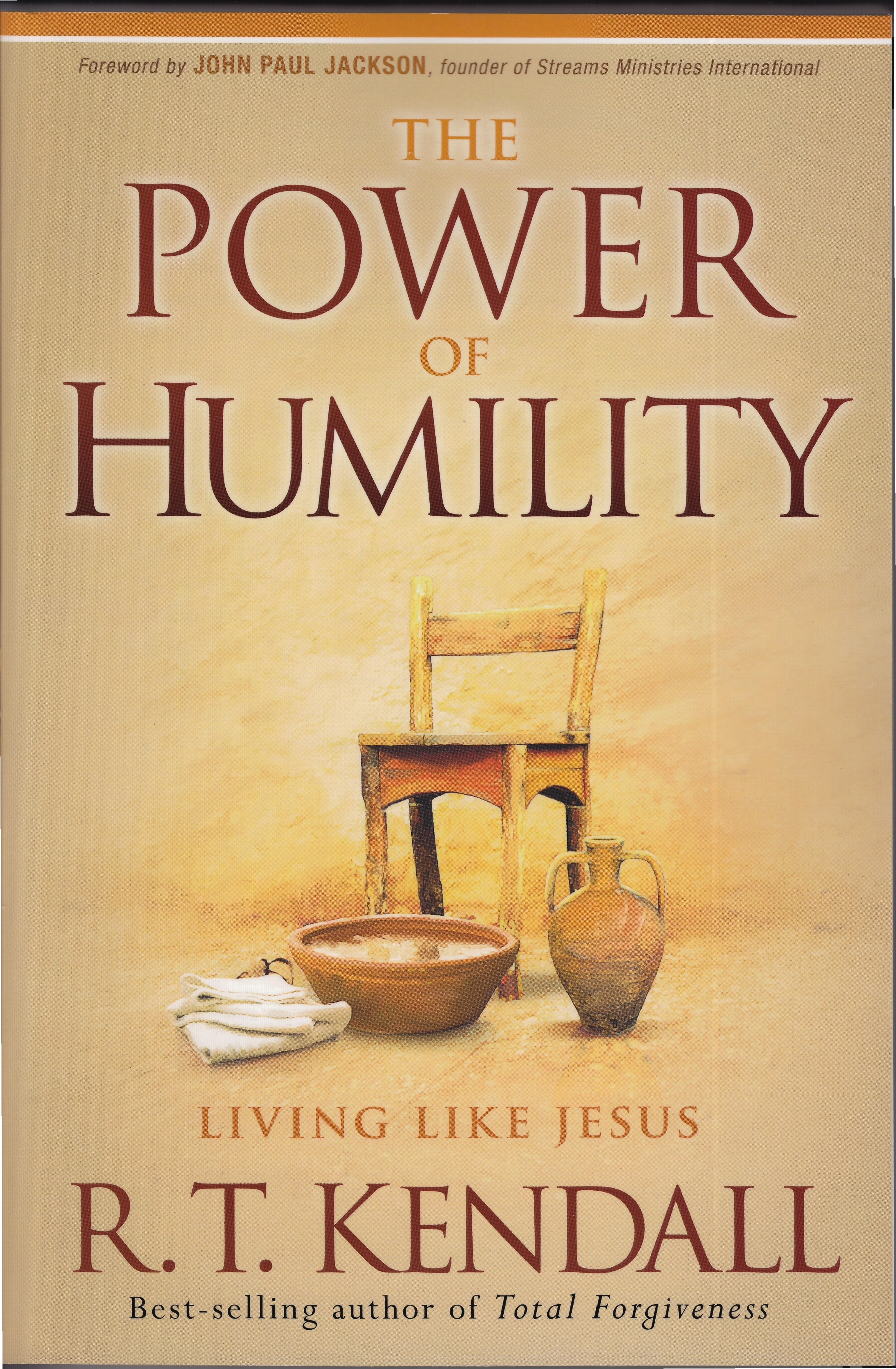
  • The Power of Humility 3

    There is a good pride (like good cholesterol which the body needs) and bad pride (like bad cholesterol which brings disease). Good pride leads to a sense of self-respect and desire to achieve. The bad pride is called a haughty spirit. It is smugness. Self-righteousness. God so hates this. We are told that a pride goes before destruction, a haughty spirit before a fall. When you see men and women boasting and arrogantly carrying on as if nothing can happen, mark it down: such a person will fall. It is only a matter of time. The Bible guarantees it.

    But the Bible says that God is no respecter of persons. None of us is exempt. The moment I begin to take myself too seriously is the moment I head toward serious problems – unless God steps in graciously to grant me repentance. He has actually done this. I am so grateful to him. I know that in earlier years I took myself so seriously. Not that I am devoid of this now. Oh no, don’t think that. But I know that God has given me wake up calls and that he has kindly led me to repentance.

    I am sure that if we were to get a true, objective picture of our smugness and self-righteousness – then see what God thinks of it, we would fall on our knees and beg him for mercy. The best thing you and I can do in this connection is to ask God in mercy to show us our self-righteousness, self-pity, feeling of entitlement and pride – but simultaneously to grant us repentance. There is good old 1 John 1:9: if we confess our sins, he is faithful and just to forgive us our sins and to purify us from all unrighteousness. He is a gracious God.

  • The Power of Humility 2

    One of the most encouraging things in all the world is to find out that the best of people are all sinners. Better still, that all of those people in the Bible had their weaknesses. Jacob had his self-pity, something that bedeviled him all his life. And one of the greatest prophets of all – Elijah – was so filled with pride, self-pity and self-righteousness that it is a wonder that God used him.

    Consider Elijah at Mount Carmel. He claimed to be the only one of God’s prophets left. Wrong. He had just met Obadiah a day or two before and knew that there were prophets Obadiah had hid in a cave from King Ahab. And yet Elijah said before everybody, “I alone am left”, showing that he felt he was so worthy! God might have said, “STOP! Elijah, I cannot use you now; you have just given into self-righteousness and shown contempt toward many of my prophets”. In other words, God could have stepped in and stopped the whole procedure.

    But God let Elijah carry on. He did not embarrass Elijah. He waited for days and days to deal with Elijah. Then one day it was as if God said to Elijah, “Oh by the way, Elijah, I have 7,000 that have not bowed the knee to Baal”. In other words, God sorted Elijah out later on – privately and alone.

    God does that with all of us. We have all messed up and given God a thousand reasons for disowning us and stop using us. But he overlooks our weaknesses graciously and later – privately, letting us save face – shows us what is wrong with us.

    I sometimes wish I could start 57 years of ministry all over again. But I tell myself, if God could use Elijah, he could use me. And if God can use me he can use anybody.

  • The Power of Humility 1

    One of the most embarrassing things I have done is to write a book on Humility. But there is a story behind this. My book on Jealousy – the Sin No One Talks About was to be followed by a sequel: Pride – the Sin No One Admits To. But my publisher said, “That title won’t sell”. (We are living in a time more than ever that publishers don’t merely take books because they are good or worthy; they must sell or the publisher loses money). I replied: I refuse to write a book on Humility.

    But it was my very pride that caused me to say that. My friend Lyndon Bowring said to me, “Don’t worry RT, those who know you best will ever accuse you of being humble”. So I agreed to the book. Not a word was changed, only the title. I actually wanted the original book to be on self-righteousness, but the publisher said that was an even worse title! It seems I come up with non-selling titles these days!

    I wrote the book with the hope of surveying the human heart. The heart – so deceitful and wicked said Jeremiah (17:9) – is like peeling the layers of an onion. We are so filled with self-pity, self-righteousness and pride. I could write a book like this because I am so filled with self-pity, self-righteousness and pride. But God has been gracious to this 77 year old and shown me some ways to deal with these weaknesses. I want this book to be a blessing to many people; to take us down off our thrones and bring us to the place we will stop pointing the finger and accuse ourselves – to admit our malady, confess it that we might be cleansed and changed.

  • Forgiving God A review

    Forgiving God

    A review of some reviews

    There are two reasons why a certain kind of ‘orthodox’ Christian might not like RT’s Forgiving God’.  One is that the very notion of ‘forgiving God’ sounds somewhat heretical.   (Some reviews seem to denounced the phrase without reading the book to see what the phrase means!  That seems to require some forgiveness too!)  It might be said, ‘Forgive’ means ‘to pardon wrongdoing’ and God is not guilty of anything.  Yes, of course, it is true!  RT himself says as much again and again (Read the book!).  It is clear (surely!) that RT is using the word somewhat differently to make the (very obvious!) point that God’s tough and largely inexplicable ways in this world often cause us a lot of pain.  So we have to consider within ourselves what we are going to do about this ‘suffering’ that God causes (or ‘permits’, or whatever).  We have to get through to the point where we let God do whatever he wants, where we allow him to be totally sovereign, where we break away from resentment, where we let him ‘explain himself’ in his time (maybe on judgement day) and not right now as we would like.  This ‘getting through’ to the point where we let God be God RT calls ‘Forgiving God’.  It is of course a metaphor.  We do not literally forgive God and RT says again and again that nothing he says should be taken as blaming God.  The hyper-orthodox critic tends to jump too quickly (even before they read the book) into criticism.  The phrase ‘Forgiving God’ is provocative and untraditional.  The hyper-orthodox – like the Pharisees who did not like healing on the Sabbath – jump in too quickly to criticize.  Forgiving God is going to be widely read.  I guarantee it!  The provocative language will offend some but thousands will identify with it and say immediately, ‘I know what he means’.

    The other reason why a certain kind of ‘orthodox’ Christian might not like RT’s Forgiving God’ is that it deals a lot with subjective feelings.  It is therapeutic, one might say.  Now this person I have in mind – a type not any particular person – is the exact opposite.  I call him a certain kind of ‘orthodox’ Christian.  He is very ‘objective’.  He points – quite rightly – to the sheer ‘objective’ facts of God’s sovereignty, God’s right to do as he wishes, and so on.  He does not like anything which gives a hint of tender feelings, of emotional comfort.  He is nervous about ‘comforting’ people.  He does not want to be ‘therapeutic’.  He wants sin to be denounced, Jesus’ atonement to be declared, justification to be proclaimed.  One would like to add ‘… and eternal security to be assured’ – but actually this certain kind of ‘orthodox’ Christian tends to add so many conditions to eternal security that it becomes eternal insecurity!  He likes old-fashioned traditional language and is critical of anything being said in a new way.  A glance at a title will bring down the spirit of denunciation!

    The great question is: does the bible stress the objective or the ‘comforting’?  Clearly it does both.  Jesus could talk about his being a ransom for sins (Mark 10:45 and so on).  Very objective!  But look at the thirty-five miracle-stories of the gospels.  It is surely obvious that as well as ‘telling the truth the way it is’ Jesus could also be incredibly ‘comforting’ and incredibly unorthodox.  Imagine making hundreds of litres of wine for a wedding!  Imagine stopping, while on an important journey, to talk to an old lady and give her comfort the way Jesus did   What should we think of his touching lepers, his chatting to a scandalously immoral lady with no one else around, his inviting himself to dinner with a notoriously corrupt tax-official, his totally ignoring Peter’s confession of his wickedness (Luke 5:8).  How can he just say to someone ‘Your sins are forgiven’, without first denouncing them?  How can he heal someone who does not even know who Jesus is (John 9).  ‘I did not come to call the righteous…’ – what would the hyper-orthodox say to that; the language is provocative!

    I am so glad of the ‘objective’ gospel that tells me that being justified by faith I have peace in relation to God – no matter how I feel.  I am glad amidst suffering to be reminded that God ‘does according to his will among the host of heaven and among the inhabitants of the earth; and none can stay his hand or say to him, “What have you done?” ‘ (Daniel 4:35).  But I am also glad when Jesus is my great high priest who comes to meet me after every battle in order to say ‘Fear not, I am your shield; your reward shall be very great’.  Our Lord Jesus Christ can be so therapeutic!  I like Jerry Bridges’s Trusting God….. It’s great!  I also like RT’s Forgiving God.  It does not contain RT’s entire theology!  It deals with one point: trusting God when life hurts.  His name for it – ‘Forgiving God’ – is provocative.  My hope for you is that you have some good solid objective doctrine to hold you when you are in trouble.  But you might need something to press the ointment of the gospel into your heart.  ‘Is there no healing ointment in Gilead?’ Preachers have different gifts.  Some are accurate exegetes expounding the text with objectivity and care.  We need them.  I would like to be one of them.  But others are more subjective, more therapeutic.  RT Kendall has gifts of originality; he comes up with striking phrases.  He is also a ‘holiness teacher’, one who gets to the bottom line and presses the application of Scripture upon us in considerable detail point-by-point.  He writes books on the details of holiness: jealousy, ambition, forgiveness, the use of the tongue, gratitude.  It’s all very subjective!  The hyper-orthodox never get down to details of holiness, although they love the general idea of holiness!  But we need this material from RT.  The bible itself has magnificent objectivity.  Yes, indeed!  But it also comes down to minute details.  It is practical, therapeutic, subjective, applicatory.  There is a strand of biblical teaching which is good psychology, good therapeutics!  Keep up the good work, RT!  We need you.

    Dr Michael Eaton
     

  • Total Forgiveness part 3

    In my 57 years of ministry the most talked about sermon I have had the privilege to come up with has been TOTAL FORGIVENESS.

    Whenever I preach Total Forgiveness I get the greatest response of people coming forward to forgive. What is more, I suspect I could go back to the very same congregations two or three weeks later, then preach the same sermon again and get the same response!

    Why? Because totally forgiving people that have hurt us is the hardest thing in the world to maintain. People do it instantly. But later forget. Fall back into the same old trap of “telling what they did”, pointing the finger, throwing up the wrongs. This is why I preach that total forgiveness is a “life sentence”: you have to keep doing it – on and on and on. A good way to maintain this is sincerely to pray for these people – every day. Every day. Just to remind you, we know we have totally forgiven when (1) we don’t tell “what they did”; (2) don’t let them be afraid of us; (3) don’t let them feel guilty – or wait for them to be sorry; (4) let them save face; (5) protect them from their darkest secret; (6) remember it is a life sentence – that is, you do it as long as you live; and (7) you pray for them – that God will bless them.

    Total Forgiveness


  • Total Forgiveness part 2

    People ask me how I have managed to write so many books. Approximately 60 to date. They think it is my brain, IQ or education. Wrong. None of these. It is the anointing of the Holy Spirit. And what exactly is the anointing? It is the power of the Holy Spirit that makes things easy. The anointing is what comes easily. Once I struggle I have gone outside my anointing, but when I live within my anointing I find that my mind flows, thoughts come and the way to express rolls out like a gushing stream.

    The question follows: where did you get this anointing? By fasting? A lot of prayer? By having people with power lay hands on you? I reply: I believe in praying and fasting and in the laying on of hands. I have had dozens and dozens and dozens of high profile people lay hands on me. Name them and I have probably been prayed for by them! And I do NOT underestimate what happened when these godly, loving and anointed people prayed for me.

    But I will tell my secret (if there is a secret): it is literally practicing what I preach regarding total forgiveness – and not grieving the Holy Spirit by bitterness. These twin teachings – (1) totally forgiving every single person in the world who has not been very nice plus  (2) the teaching of not grieving the Holy Spirit by anger and bitterness – are the secret to my writing books. Total forgiveness enables the Holy Spirit to flow freely and unhindered in me. The result: thoughts come, words flow and God opens the doors.

    He will do this for you. Total forgiveness is the secret to the anointing and is available to all who will let people off the hook who have been hurtful or injurious. A forty-day fast will not do it, neither will a thousand people laying hands on you. The secret is totally setting your enemy free and praying for them – sincerely – that God will bless them.

    Total Forgiveness


  • Total Forgiveness

    My most successful book was born in what was (at the time) the greatest trial that Louise and I ever went through. I was angry, bitter, depressed. But an old friend – Josif Tson of Rumania (who as it happens now lives in America) – happened to be in London. Because I knew he wouldn’t tell anybody I told Josif. If I am totally honest I only told Josif so he would put his arm around me and said, ‘R T you have a right to be angry; get it out of your system’. I don’t always tell what immediately happened; he asked for 15 minutes to take a nap as I made a cup of tea for him. He was back in 15 minutes and the tea was very strong. ‘That’s what I call a cup of tea’, he said to me.

    Then Josif looked at me and said, ‘R T, you must totally forgive them; unless you totally forgive them you will be in chains. Release them and you will be released’. Nobody had ever talked to me like that in my life. I think of the words ‘Faithful are the wounds of a friend’ (Prov.27:6). If I could narrow 25 years in London down to 15 minutes those 15 minutes turned out to be my finest hour. I would never be the same again; my ministry would never be the same again. The last thing I dreamed was that I would preach a sermon on this, much less a book! First came God Meant it for God – the most important chapter being called ‘Total Forgiveness’, then (a few years later) the book Total Forgiveness. I have received countless letters from people whose lives have been changed – from marriages to children forgiving parents and all kinds of others situations. The book is now in 20 languages and has been accepted in China!

    What God did for me he will do for you. All of us have a story to tell. Chances are you have a story, if told, far outweighs mine in terms of unfairness and hurt. I reply: the greater the suffering the greater the anointing and blessing – if you truly totally forgive them. Your life will change and make you a great blessing – and, most of all; you will be blessed with extraordinary grace and freedom.

    Total Forgiveness


  • Totally Forgiving God – God’s Perspective

    God’s perspective

    1. Possibly my greatest insight in 25 years in London came when I saw the meaning of John 11:15; it is the reason Jesus didn’t heal Lazarus.

    2. Part of the answer to the question ‘Why does God allow evil?’ is the answer Jesus gave to his disciples: ‘That you may believe’ (John 11:15).

    3. Faith is an inestimable privilege; we will not always have the privilege of believing without seeing. Take full advantage of this moment.

    4. When God does things for us he pleases us; but when he (apparently) does not do things for us it is our opportunity to please him.

    5. When Jesus comes in the clouds and every eye sees him all will say, ‘NOW I believe’, but, sadly, this won’t be faith at work – only sight.

    6. Mary and Martha blamed Jesus for his not healing Lazarus, but Jesus did not rebuke them or moralize them; he merely wept with them (John 11:35).

    7. Jesus might have said to Mary and Martha, ‘Quit crying so I can raise Lazarus from the dead’; no, he simply wept with them (John 11:35).

    8. God knows that we don’t know what he is about to do; he therefore weeps with us in our sorrow and disappointment.

    9. When God does not answer our prayer – as he did not do what Mary and Martha wanted, it is because he has a better idea than ours.

    10. Jesus shows that raising Lazarus from the dead was a better idea than keeping him from dying.

    11. God wants us to know his ‘ways’; we soon learn that his ways are different and higher than our ways (Isa.55:8).

    12. Moses asked, ‘Teach me your ways’ (Exod.33:13); it is possibly the most noble request we can put to God.

    13. Setting God free (that is forgiving him) comes to the degree we get to know – and accept – his ways.

    14. God lets unpleasant things happen to us partly to teach us his ‘ways’ – and to see if we will love him for being just like he is.

    Totally Forgiving God


  • Totally Forgiving God

    I have just completed the trilogy – three books: Total Forgiveness, Totally Forgiving Ourselves, Totally Forgiving God. I think Total Forgiveness is in three languages. It was my friend Rob Parsons (after reading Totally Forgiving Ourselves) phoned me and said, ‘R T, I know what your next book should be – if you have the courage: Totally Forgiving God. I swallowed. I am ashamed to admit, I only thought of my critics at that moment (I do have them), that they would see the title but not read the book. But I got over that and decided to write the book. Both of my publishers (UK and USA) think this is my most important book. (Mind you, all authors think their most  recent book is the best and most important!) But this may well be.

    Does God need to be forgiven? What has he done that is wrong? Nothing. Then why forgive him? Because he allows things which he could stop but sometimes doesn’t. He lets things happen to us – bad things, horrible things. He has his reasons for letting them happen. Our responsibility (this pleases him): to let him off the hook, not holding anything against him for what he allows.

    An illustration of what I mean: I have a very good friend (renowned theologian) who would not endorse my book The Anointing. I was devastated. But my friend did no wrong; he was being true to himself. I had to forgive him – which I did. This is a drop in the bucket compared to the way we must let God off the hook – set him free and wait for him to clear his Name on the Last Day. He will. Let’s not wait until then to see how he does it; let’s clear his Name now. By faith. Habakkuk did. So can we.

    There are two kinds of faith: biblical faith (believing without seeing, as in Hebrews 11:1) and secular faith (seeing is believing, as in Mark 15:32). The only faith that pleases God is believing without seeing. Habakkuk wanted an immediate answer as to why God allows evil. God replied: I will tell you in the ‘end’ (Hab.2:3). Habakkuk might have argued back, ‘That’s not good enough, I want an answer now’. But Habakkuk accepted God’s verdict to wait till the end, and said: ‘Though the fig tree does not bud, and there are no grapes on the vines, though the olive crop fails and the fields no food, though there are no sheep in the pen and no cattle in the stalls, yet I will rejoice in the Lord, I will be joyful in God my savior’ (Hab.3:17-18).

    That was Habakkuk’s way of forgiving God. You and I cannot do better than that.

    Totally Forgiving God

    R.T. Kendall