Category: Featured

HOME PAGE FEATURED

  • The God of the Bible 3

    The God of the Bible 3

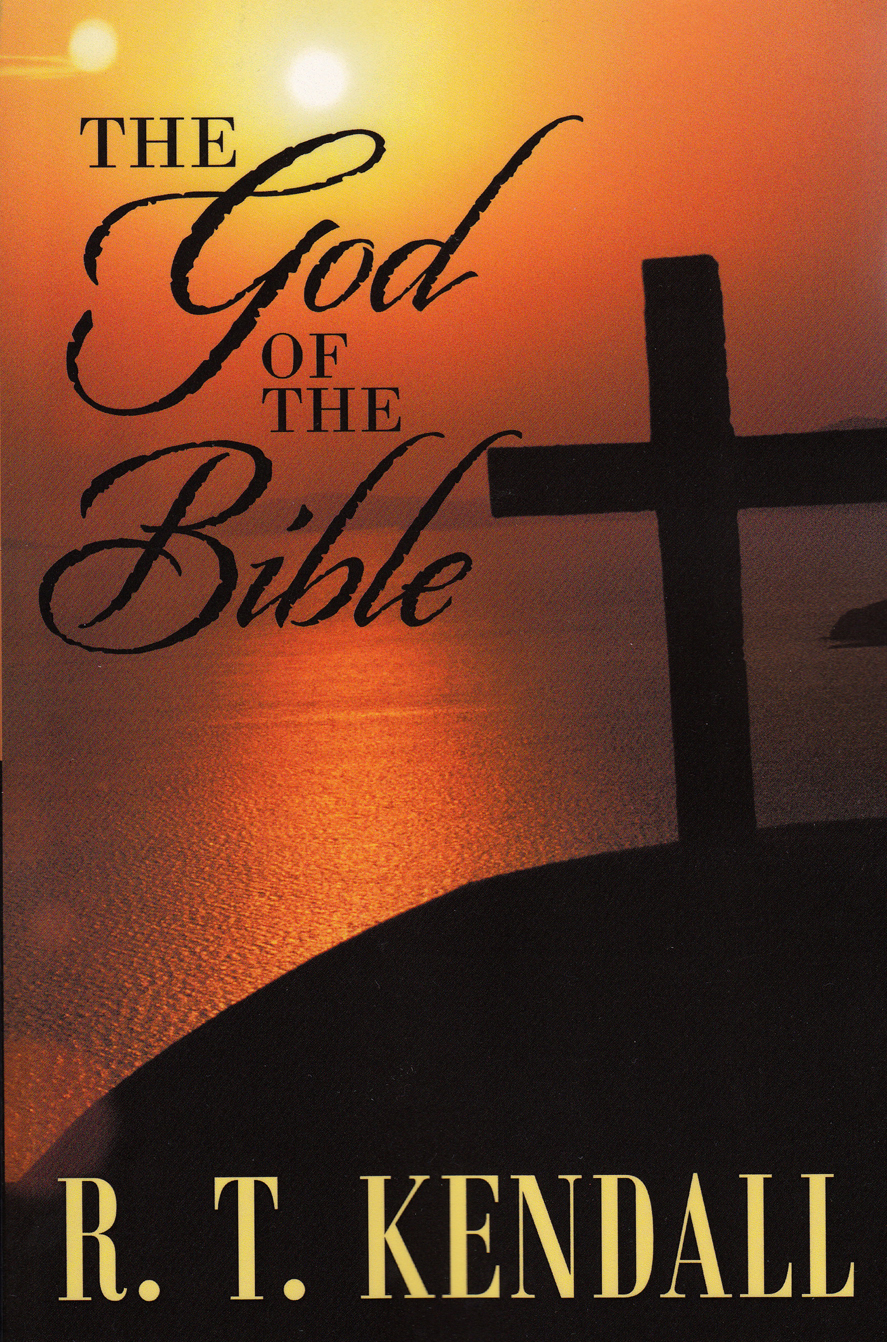
    In my book The God of the Bible I deal with four chapters (expositions) from the Book of Daniel – chapters 1, 3, 5 and 6. These were originally sermons preached at Spring Harvest in England – since edited to read better in a book. (That is, I hope they read better!). There is a lot in the book of Daniel I don’t understand, but I think I do understand chapters 1, 3, 5 and 6. In Daniel chapter one we have an account of four young men – Daniel, Shadrach, Meshach and Abednego – who were from the privileged class in Jerusalem who were exiled to Babylon. They were part of the first deportation of the Israelites in 597 B.C. Their first challenge was their diet. They were given the finest foods and wine from the king’s table. But they refused. They opted for what might be called the first recorded high-fiber diet! These men were being true to themselves. As it turned out, they got permission to ‘give it a go’ – to eat their own diet exclusively but be tested at the end of ten days. As it turned out, at the end of ten days ‘they looked healthier and better nourished than any of the young men who ate the royal food’ (Dan.1:15).

    The three Hebrews – Shadrach, Meshach and Abednego – were later put to a greater test. Either they bow down to the golden image that King Nebuchadnezzar set up or be thrown into a furnace of fire. But these three young men refused to bow. The king was enraged. He asked, “What god is able to rescue you from my hand?” (Dan.3:15). Their reply sets an example for all of us: “If we are thrown into the blazing furnace, the God we serve is able to save us from it. . . but even if he does not, we want you to know, O king, that we will not serve your gods or worship the image of gold you have set up” (Dan.3:18). The King James Version says, “But if not” rather than the NIV “even if he does not”. In my book The God of the Bible I call the chapter on Daniel 3 the “’But if not’ faith”. I recall a lady at a prayer meeting in Alabama who asked those present , “Do you have the ‘but if not faith’?”

    Do you? Are you prepared to stand for your principles on the basis that God is able to spare you and deliver you – “but if not” – you will not give into the spirit of the age?

    One of the curses of the currently popular prosperity teaching is that it encourages people to believe that God will always prosper them in health and wealth. What is lacking in so many of these who teach this is that they neglect to say, “But will you serve God even if He does NOT prosper you?” In other words, where will you stand if you believe that God is able to deliver you, “but if not”?

    In my treatment of Daniel 5 I call the chapter “The Party’s Over” when the King Belshazzar trembled seeing the scary but miraculous handwriting on the wall. In Chapter 6 – when Daniel was thrown into the lions’ den, the title is “An Open Secret”. The secret to Daniel’s wisdom was his courage and fearlessness in praying when he was commanded not to do so. Nothing could stop him. He was vindicated in the end. But he did not know if he would be! That’s the real test. What if it is likely you WON’T be vindicated for your stand? Would you be equally as faithful?

    I believe we are living in a generation that will see many, many people suffer and even die (sometimes with torture) for their faith. I could be one of them. Who knows? Are you willing? Am I? I think so. My fear would not be for myself but for my family. I can only pray that they will be equally courageous when threatened with pain or death if they don’t bow to the ‘god of this world’. I pray this for my son TR. For by grandsons Toby and Timothy. I would rather leave a legacy of fearlessness for the God of the Bible than ten millions dollars tax free.

    There is a song we used to sing in Sunday School when I was a child, “Dare to be a Daniel, dare to stand alone’. That chorus influenced me profoundly. Now that I am old (78) I am more determined than ever to be a Daniel, to be like Shadrach, Meshach and Abednego. I want to be stronger than ever, more rugged than ever, bolder than ever, more fearless than ever. I am not ashamed of the God of the Bible. This is the true God. This is the only God who can do things, make things happen, deliver us and vindicate?

    But if he doesn’t, I will not change my preaching. My teaching. Or alter my faith.

    Do you have the “but if not” faith?

    If you would like a copy, we are offering this book at a reduced price this month.

    The God of the Bible


    Do you?

  • Dear Dr. MacArthur

    Dear Dr. MacArthur,

    I have admired you as an able writer and speaker for years. I have not only read your book Strange Fire but listened to your talks as well as the panel discussions at your recent conference. I am as reformed theologically as you are and can say we are on the same page when it comes to many issues you address.

    I was not prepared however for some of the things you said. I had to reread some parts to be sure you said what I thought you said. First, if your book purports the danger of offending the Holy Spirit with counterfeit worship, I fear you are in greater danger of offending the Holy Spirit by attributing His work to Satan. Does this not worry you? You are risking an awful lot by counting on cessatonism to be totally true. You have tried to turn the hypothetical teaching of cessationism into a dogma.

    Second, surprisingly, you imply that my predecessor Dr. Martyn Lloyd-Jones would agree with you. A major portion of my own book Holy Fire is devoted to what he believed regarding the gifts, the baptism and the immediate witness of the Holy Spirit. He was no cessationist; he loathed cessationism. Nearly every Pentecostal and charismatic in Britain knew he was their friend. Not only that; he has turned more of them into reformed thinkers than anybody in the twentieth century. He would be horrified that you dismiss as demonic all contemporary testimonies of experiencing the direct work of the Spirit. According to you, my own baptism with the Spirit was demonic even though it led me to reformed theology without reading a single word of John Calvin.

    Third, to be consistent, if you have got it right, we should counsel new Christians to disregard many Scriptures – e.g. those that encourage us to believe that Jesus Christ is the same yesterday, today and forever (Heb.13:8), that he still shows us when we are on the wrong track (Phil.3:15), that the Holy Spirit cannot speak today as he did to Philip (Acts 8:29) or that we should covet earnestly the best gifts (1 Cor.13:31).

    I hope you will consider reading my book. It will do you no harm and, just maybe, you might hear God speak to you in a way you never thought possible. I only pray with all my heart that you have not gone too far already. In the second panel discussion at your conference you actually said, “I know I am wrong somewhere”. If so, who would you listen to? Would you not want to know as soon as possible if you have got it wrong on those matters you are so dogmatic about?

    If I knew for sure it would be honoring to God – for the sake of sincere Christians who are fence-straddling on cessationism, I would ask that you and I have a civil debate (presidential style) on the issue of cessationism. Could we pray about this?

    — R. T. Kendall


  • The God of the Bible 2

    God of the Bible

    I recently had lunch with a retired professor of theology from a well known university in Tennessee. He kindly read my book Holy Fire – to be published shortly. My book Holy Fire is a reply to a book called Strange Fire, which has recently been published. I had asked my professor friend to read my book Holy Fire with the view of making a commendation – which he kindly did. But when we had lunch, following his reading Holy Fire, he said something very interesting to me – for which I was not prepared. ‘You and I have completely opposite world views’.

    Really? Yes. But here is what he meant. His ‘God’ is not really the God of the Bible but rather a God that is alien to historic Christianity as revealed in Holy Scripture. I did not realize how liberal this professor has turned out to be. He has clearly opted for a position called ‘open theism’. Open theism is process theology in evangelical dress. Process theology takes the view that God is always doing something new and different. He was doing one thing 2000 years ago, another thing in the 16th century and yet another thing now. This of course is not the God of the Bible but a God who will enable even an atheist to accept!

    Years ago I read a book called God in an Age of Atheism. The bottom line is that the person who thought he was an atheist may not be an atheist after all; he merely needs to be acquainted with another way of looking at God – one who does not know the future but only the present. It is virtually pantheism (all is God) although the proponents want to call it panentheism (all is in God). Open theism takes the view that God needs our wisdom to know what to do next. He does not know the future – only the present. We help him decide what to do. Sadly this is what my professor friend believes!

    So when he said we have opposite ‘world views’ he is quite right.

    I believe in the God the Bible. Do you?

    I have to tell you, the true God will not win popularity contests. I am amazed how the world – and some professing Christians – are going mad for open theism.

    The time has come when Christians need to get off the fence. Fence-straddling is what Elijah faced with the people of Israel. Fence-straddling is what you and I face when we look at contemporary Christianity.

    This is why I call my expositions from Daniel, John, Acts and Romans The God of the Bible. Kindly read my book and tell me if I described your God – or is it a God who embarrasses you?

    If you would like a copy, we are offering this book at a reduced price this month.

    The God of the Bible

  • The God of the Bible 1

    The God of the Bible

    We lived in England for over twenty-eight years; three in Oxford, four months in Brackley, Northamptonshire and twenty-five in London. During our twenty-five years at Westminster Chapel I was invited to speak seventeen years in a row at an annual event called Spring Harvest. It came every April, was held in at least two locations (Minehead, Somerset and Skegness, Lincolnshire). People would come for a week at a time. I did the ‘Bible readings’ – the English word for Bible expositions – or teaching. What partly made this even unusual is that it got traditional Christians and charismatics together – something never done before. This event had a lot to do with making the Charismatic Movement in England mainstream, whereas in America Pentecostals and charismatics are still largely seen as the lunatic fringe of Christianity.

    I chose sixteen Bible expositions for a book which was published in the UK. We called it The God of the Bible. It went into several reprints but never I never tried to get it published in America.  However, I recently signed a contract with LifeWay whose publishing arms is called LifeBooks. We gave them three books initially: He Saves (an exposition of Romans 1:16-18), Once Saved, Always Saved (a title that pretty much speaks for itself) and The God of the Bible (sixteen Bible expositions from Daniel, Romans, John and Acts). These three books are available in Christian bookstores (especially LifeWay) and our website (www.rtkendallministries.com)

    There are three sermons I listened to many times over fifty years ago that shaped my thinking and preaching style – one by T. M. Anderson in 1951 on Revelation 1:17 (‘When I saw him, I fell at his feet as dead’), one by Martyn Lloyd-Jones on  Luke 24 (the two men on the road to Emmaus – the sad heart, slow heart and burning heart) and one by Rolfe Barnard.The theme ‘God of the Bible’ came to me because of a sermon by Rolfe Barnard (d.1967) which I first heard in 1963. I listened to it again and again. It had profound influence on me, shaped my thinking considerably. Rolfe called it ‘Your God vs. the God of the Bible’.

    We are living in terrible, terrible times. If our generation is not described in the New Testament as ‘the last days’ I don’t know what is. I refer not merely to the political situation but the state of the church, speaking generally – we are in a deep, deep sleep. The next thing to take place in God’s scheme (in my opinion) is the cry in the middle of the night – as described in Matthew 25:6.

    How are we to prepare for this? One thing for sure is this – we had better get acquainted with the true God – the God of the Bible. If our ‘world view’ is not shaped by the God of the Bible we will find ourselves not only sound asleep spiritually but, alas, like the five foolish virgins described in Matthew 25:1-11. I would like to think that my recently published book The God of the Bible will be a major teaching aid to prepare us to face these troublesome times.

    If you would like a copy, we are offering this book at a reduced price this month.

    The God of the Bible


  • Lords Prayer 3

    Having given us God’s prayer list, Jesus now tells us what our prayer list should be when we pray. First, surprisingly, we pray for our essential daily needs: ‘Give us this day our daily bread’. Some early church fathers thought this was a daily prayer for ‘spiritual’ bread, but the Reformers (as Luther and Calvin) said such was nonsense; that the prayer for daily bread certainly does cover our physical needs. We have to eat in order to live. Jesus realistically asks us to pray that we are taken care of at the physical level – our daily food. We cannot adequately pray for spiritual needs when we are starving.

    It was an agrarian society in Jesus’ day. They did not have food in their freezers. They lived day by day – one day at a time. Therefore the prayer for daily bread was a serious request to God that food will be provided. But such a prayer also refers to our sleep, our emotional needs, our finances and general well being in order to cope in life.

    Having prayed for our essential needs, the second thing on our prayer list is for the forgiveness of our sins. It is not a prayer for salvation but for continued fellowship with God in the Kingdom. In order to have a relationship with the Holy Spirit it is essential that the Spirit be ungrieved. Unforgiveness grieves the Spirit. So in this fifth petition – Forgive us our trespasses as we forgive those who trespass against us’, it is a plea and a promise. The plea is that God will forgive us our sins. We are all sinners. If we say we have no sin, we deceive ourselves and the truth is not in us (1 John 1:8).

    But do not forget the pledge we make when we pray the Lord’s Prayer: that we have forgiven those who have trespassed against us. Have you? Do you realize what you are saying when you pray the Lord’s Prayer – that you have forgiven those who have trespassed against you? Have you really? If you have not read it, look at my book Total Forgiveness.

    The petition ‘lead us not into temptation’ is a difficult one to explain theologically. It implies that God could actually lead us into temptation. The best way to understand this, as Dr. Michael Eaton put is, is to pray God will not let us be lead ‘into’ temptation – that we will not be thrown in at the deep end as it were; that we won’t have to face what seems to be over our heads. We should pray this daily.

    Finally, the petition ‘but deliver us from evil’ (some think it is a continuation of the previous petition, some think it is yet another one, making it seven – but it doesn’t matter) is a prayer to be delivered from Satan’s attack and oppression. The Greek probably should be translated ‘evil one’; deliver us from the evil one. The devil is always on the prowl – like a roaring lion, seeking who he may devour (1 Pet.5:8)

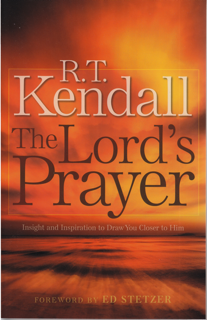
    The conclusion, ‘Thine is the kingdom, the power and the glory’ is possibly not in the original. Who knows? But I have none the less dealt with these words in my book The Lord’s Prayer.

    The Lords Prayer

    Read more in my book on this fascinating and important subject. On sale this month.

  • Lords Prayer 2

    The Lord’s Prayer contains six (perhaps seven) petitions, the first three are God’s prayer list, the last three (or four) would be our prayer list.

    God puts his own prayer list first – for our benefit. We should never rush into God’s presence with our demands but rather realize we are approaching the Most Holy God, and should do so (as it were) on bended knee.

    Some say the Lord’s Prayer should not be prayed because it does not end ‘In Jesus’ Name’. Wrong. The moment we say, ‘Our Father’, we instantly are praying in Jesus’ Name because we could not call God our Father apart from Jesus being our Saviour, Lord and Elder Brother. Jesus is the only ‘natural’ born Son of God. You and I are adopted sons and daughters of God. This is what gives us the right to call God ‘our Father’ – a prayer therefore that presupposes the Name of Jesus.

    God is in Heaven, we are on earth. We should let our words be ‘few’ (Eccl.5:2). The Lord’s Prayer touches on the transcendence of God (He is in Heaven) but also God’s immanence (‘Your kingdom come’). As I try to show in my own book The Lord’s Prayer, the Word and Spirit coming together are implied.

    The words ‘Hallowed’ be Your Name is not merely an acknowledgement of the holiness of God; it is a prayer that God’s Name will be sanctified all over the earth. The Beattles once boasted that they were ‘more popular than Jesus’. They were probably right, sadly. But the Lord’s Prayer is a plea that God will be famous in the world He created.

    When Jesus gave us the petition ‘Thy kingdom come’, there is no doubt that the disciples took those words to refer to an earthly kingdom. They could not conceive of a reign of a king except in material terms – as if the kingdom would be like the  ‘glory days’ of Israel when David and Solomon reigned. It was not until Pentecost that the disciples grasped the kingdom as being something spiritual – namely, the rule of the Holy Spirit.

    Therefore when you and I pray the Lord’s Prayer and come across the words ‘Thy kingdom come’, we must mean the rule of the Holy Spirit in us. Or as I put it in my book, the rule of the ungrieved Holy Spirit in us. And yet the petition ‘Thy kingdom come’ is a prayer for revival. There is more: it is a prayer for the Second Coming!

    Therefore when you pray the Lord’ Prayer – praying, ‘Thy kingdom come’, you are praying for intimacy with God, the demonstration of the power of God in the world and for the final coming of Christ on the Last Day.

    ‘Thy will be done on earth as it is in Heaven’ is an acknowledgement that God’s will is being done perfectly in Heaven. There is no rebellion in Heaven. Therefore when we pray that God’s will to be carried out on earth as it is in Heaven we are praying we will be just as submissive to God’s will as the angels and sainted dead are. Some believe this is a prayer for people to be healed since there is no sickness in heaven. In other words, if there is no sickness in Heaven, there should no sickness on earth. I don’t agree with this interpretation. Jesus only meant that we should be as obedient to God on earth as they are in Heaven. I certainly do pray for just that!

    The Lords Prayer


    Read more in my book on this fascinating and important subject. On sale this month.

  • The Lords Prayer 1

    This blog and perhaps one or more to follow is about the Lord’s Prayer. It is in the middle of the Sermon on the Mount (Matt.6:9-11) and in Luke 11 when the disciples came to Jesus and said, ‘Lord, teach us to pray’ – and then gave what we now know as the Lord’s Prayer.

    When I pray I want to know that I am praying in the will of God? Why? Because He only hears prayers that are prayed in His will. If we ask anything according to his will, he hears us (1 John 5:14).

    The problem is, we don’t always know we are being heard. This is why John followed up with a huge ‘if’ – ‘if we know that he hears us’. That is a big ‘if’. You may ask: don’t we always know whether we are praying in the will of God? No. Zechariah asked God for a son. He was heard. But he did not know at the time he was heard. He and Elizabeth gave up praying for a son a long time ago. They reasoned that with his age and her apparent barrenness that their prayer was not in God’s will.

    They were wrong. It was – after all. After they had given up praying the angel Gabriel appeared to them to say, ‘Your prayer has been heard’ (Luke 1:13). I unfold this in more detail in my book When God Shows Up.

    My point is, when we pray the Lord’s Prayer we can know absolutely and utterly that we are praying in the will of God. Why? Because Jesus told us to pray this prayer! Not only that; He wrote it!

    I believe in the infallibility of the Bible. But when you have our Lord Jesus Christ giving us a word which He himself created, I would call it being doubly infallible. Jesus’ prayer is verbally inspired – word for word. So if you want to know when you pray that you are praying in God’s will, pray the Lord’s Prayer. It is absolutely God’s prayer for you and me to pray.

    When we were at Westminster Chapel we as a congregation prayed the Lord’s Prayer every Sunday morning. I wish every church did. Perhaps they fear being too liturgical. I fear that people don’t even know the Lord’s Prayer! At least they would be pretty forced to learn it if their church prayed it!

    It is not the only way to pray. I do not find that it was uttered ever again – except when Jesus gave it. It is not in Acts – or any of the epistles.

    But I pray it every day. Louise and I pray it every day.

    That said, the Lord’s Prayer mainly is a pattern prayer. If a new Christian wants to learn how to pray, I say: look at the pattern of the Lord’s Prayer. You begin with focusing on God, then come to our own requests. All good praying should begin not by rushing into God’s Presence to demand this or that, but by addressing God and put His requests first.

    The Lords Prayer


    Read more in my book on this fascinating and important subject. On sale this month.

  • A Vision of Jesus 2

    I have said many times that there are some things I believe that I would not go to the stake for – my ecclesiology and eschatology, for example. The New Testament teaches three forms of church government. You can decide which you prefer – the congregational, episcopal or presbyterian. As for eschatology I certainly don’t think the Bible teaches more than one point of view but, it seems to me, has purposefully been less than clear as to the details of the very last days. Why? Possibly to keep us from gloating should we get it exactly right, that is, in advance of the unfolding of events. Never forget that the details of the First Coming of Jesus were not fully understood until after the events transpired. What if it should be that way regarding the Second Coming? Would you be disappointed?

    I would go to the stake for my soteriology and doctrine of the Holy Spirit. Indeed, my views on salvation and the Spirit have got me into more trouble than anything else. I have had to fight the “Elijah complex” for years! As for the doctrine of last things, I would love – I cannot exaggerate how much – to have the Book of Revelation unraveled before my eyes. If this were to happen, does it mean I should preach it? Or keep it to myself?

    What I believe as I write these lines is this: Jesus – the same Jesus who died on a cross and rose from the grave – is literally, physically and openly coming again. I believe His coming will be preceded by a Great Awakening – the most stunning in the history of the Church. This awakening will include the lifting of the blindness on Israel and the conversion of hundreds of thousands of Jews. It will also result in the overthrow of Islam by virtue of so many Muslims openly coming to Jesus Christ. Parallel with this will be the Church being awakened and a restoration of power as in the days of the earliest Church – including people being raised from the dead.

    Would I go to the stake for these opinions? No. But I believe what I just wrote. Not as much as I believe what I do about the Holy Spirit and salvation. But almost!

    It is my prayer – most fervent prayer (only God knows how deeply I want this) – that an “oath level” clarification will come to me regarding things eschatological in my lifetime. Were this clarification to come I would then be willing to announce that I would go to the stake for what I have put in this brief blog.

    Question: how much of what you believe would you be willing to go to the stake for?

    RTK

    Judgment Seat of Christ


    Read more in my book on this fascinating and important subject. On sale this month.

  • A Vision of Jesus Revelation 1

    Revelation Chapter One

    An interesting irony has taken place in me since November 1954 (when I first felt called into the Ministry). At that time the Book of Revelation was the one book in the New Testament I understood best (so I thought). Now that I am old (78 in July 2013), it is the book I understand the least! When I was a student in Trevecca Nazarene College (now University) – even before I felt called to preach – I took a course in “New Testament”. I remember the professor announcing, “Next week we come to the Book of Revelation. Frankly, I don’t understands this book. Is there anyone here who does?” I raised my hand. “Oh, Brother Kendall, how would you like to teach the class next week?” Without the slightest blushing I agreed.

    So I did. I went through the whole book of Revelation from Chapter One to the End – explaining it all in 50 minutes: the Rapture, Great Tribulation, the man of sin – the antichrist, the Second Coming, the Millennium, Final Judgment and Heaven. It was all so clear to me. I had read one book on it and heard my pastor preach on it. I was so proud of myself. I then awaited the praise of my fellow students. They all quietly filed out. One student (I will never forget it) came up to me and said, “Do you always hold your mouth like that?” As for the professor’s verdict, he only said, “You may be right R. T.  I don’t know.” It was a day of humbling. I needed it. But now – some 60 years later, I have to say that the Book of Revelation is the book I least understand. And yet I probably understand it better now than I used do, and what I now believe about it is a lot different from what I used to believe.

    The first Sunday evening series I did at Westminster Chapel was on Revelation Chapter One. When Dr. Lloyd-Jones heard I started a series on Revelation he said to me, “I was surprised to hear that”. I quickly assured him I was only going to deal with the first chapter. He was relieved!

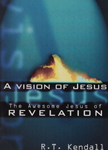
    Not that I fully understand Revelation 1! But I would stress one thing: the title of the book is not the book of “revelations” but the Book of Revelation; technically, the book of The Revelation of Jesus Christ. It is a book about him. That said, I have my own book on it – it is based in fact on the very series I just referred to. A secretary typed the sermons from a tape recorder; we edited them and gave it to a publisher who had requested them. The publisher chose to call the book  A Vision of Jesus. I deal with the entire chapter but mainly with the various descriptions of Jesus that are given in verses 13-16. They really aren’t that difficult to figure out. So no great insight or wisdom was needed to deal with Revelation 1. But people were blessed by it. I even had some tell me it was their favorite book of all that I have written. The theme is “Who is Jesus?” but based upon those verses which unveil the way he is depicted in John’s vision of him.

    The big thing I feel about the Book of Revelation now however is that what will shortly come to pass is what will be unveiled. In other words, if the fulfillment of these things was two thousand years later – after John received the revelation on the Isle of Patmos, no wonder it was not understood when it was first written (presumably around 100 A.D.) Or 500 years later. Or 1,000 years later. John Calvin wrote a commentary on every book of the Bible except the Book of Revelation. He did not understand it. I am not even sure the Apostle John himself understood it; he merely wrote down what he saw. Keep this mind: not what he understood but what he saw. But if we get close to the time of the actual fulfillment of these things in the Book of Revelation, I have a theory that some of God’s servants will see clearly what this book means. I wish I would be one of those servants!

    By the way, A Vision of Jesus is out of print. We are going to reprint it down the road but have a few copies we want to get rid of. The proof of this is that we are selling them for $5.97 plus postage/shipping.

    I have done some sixty “tweets” on Revelation 1 this month. May do more later. If I have got it right: the reason no person has understood the Book of Revelation is that the true meaning will be unveiled only when we are very close to the fulfillment of it. That is the meaning of the words “to show his servants what must soon take place” (Rev.1:1).

    RTK

    RT-Books_Page_29


    Get your copy today, before they are gone!

  • A July 4th Relevant Word for America

    My pastor Dr. Bruce Chesser has given me permission to use some of his July 4th sermon for my blog in view of July 4th. I thought it was painfully relevant for America at the present time: RT K

    Psalm 126 is one of the Psalms of Ascent.  The people would sing these songs as they would make their way into Jerusalem for the celebrations.  It helped them to remember and to thank God for His blessings upon them.  The first three verses of Psalm 126 are characterized with the words ‘laughter’ and ‘joy.’  They were remembering the time when they were in exile.  They have been restored to their homeland.  Sometimes you do not realize what you have until it is gone.  We do not miss it until we no longer have it.  They had been in exile and, as a result, they now knew just how special it was to live in the land of Canaan.  Verse 2 and 3 said “Then they said among the nations, ‘The Lord has done great things for them.’   America is the envy of the nations, too.  Every day we hear about immigration reform.  Have you ever wondered why we have some an immigration problem in America?  It is because people want to come here.  They are trying to figure out ways to get here.  Out of almost 200 nations on planet earth, most of them do not have an immigration problem.  We do because it is a blessing to live in America.

    We are blessed to be able to move freely.  If you want to go on vacation to the beach, go!  If you don’t like the beach you can go to the mountains.  This July 4th holiday will see almost 41 million Americans travel more than 50 miles from home.  And it’s not just freedom around vacation.  If you want to live somewhere else you can pack up your belongings and move.  We have great freedom.  If you want a better job, go for it.  If you need more training or education there is a school just down the road and if that one doesn’t work there is another one just past it.  Opportunities abound!  Most of us have food to eat, clothes to wear, and a little extra spending money.  While we might not consider ourselves rich the fact is that compared to most of the world we are, indeed, wealthy.

    The last half of the Psalm changes tones.  The mood goes from joyful to sad.  Words like ‘tears’ and ‘weeping’ characterize the verses.  The Psalmist realized that while the people have returned to the land physically, spiritually they are still far away from God.  He is praying for them to be restored to the Lord.  The fact that they are not makes him sad.  I am sad today for what I see around us.  I am sad about the materialism of our day.  I am sad about the political correctness that tries to silence those that speak truth.  I am sad about the lack of basic morality in our nation today.  But there is a positive note to be sounded.  There was a day when being a good person looked very similar to being a Christ follower.  It was really hard to tell the difference.  The result was a ‘cultural Christianity’ that may have used the right words and treated people with kindness but lacked the spiritual regeneration that comes thru a relationship with Jesus Christ.  No more.  Those days are gone.  If we determine to be followers of Jesus Christ we will stand out and be different than the world around us.  Perhaps now more than any time since the days of Peter, Paul, James and John do we have an opportunity to be salt for a decaying society and light for a dark world.

    I am sad for the spiritual frauds that fill the landscape.  Man is hopelessly religious and will continue to seek to fill that God-shaped vacuum with something that will bring meaning and purpose.  The result is all of the ‘isms’ of the world and the new age movement and harmonic convergence and on and on it goes.  The world needs to hear in a loving, kind, gracious and Christ-honoring way that there is only one way to God the Father and that is thru the Lord Jesus Christ.  The Psalmist said “Going…weeping…sowing…reaping.”  We must go where they are.  The world is no longer coming to us.  We must go.  We must go weeping.  We are weeping because they are lost.  And lost people will spend eternity separated from God.  We must go weeping and sowing the seeds of the Gospel.  When we do that the result will be that we will reap a harvest.

    Dr. Bruce Chesser
    First Baptist Church Hendersonville TN